Illuminati in Conakry

On post-truth, conspiracy theories, and the majority world

By Joschka Philipps, University of Bayreuth

“Post-truth,” defined as “relating to circumstances in which objective facts are less influential in shaping public opinion than appeals to emotion and personal belief” (Flood, 2016), has attracted substantial attention, and lament, in public discourse and within the discipline of sociology (Aradau & Huysmans, 2019; Ball, 2017; Drążkiewicz & Harambam, 2024; Fuller, 2018; Hess, 2020). Twelve years before the term gained notoriety as the 2016 Oxford Dictionary’s Word of the Year, the late Bruno Latour argued in 2004 that the weapons of critical theory had fallen into the hands of ludicrous conspiracy theorists. “What has become of critique,” Latour (2004, p. 228) asked, “when my neighbor in the little Bourbonnais village where I live looks down on me as someone hopelessly naïve because I believe that the United States had been attacked by terrorists [on 9/11]?” And then:

Let me be mean for a second. What’s the real difference between conspiracists and a popularized […] version of social critique inspired by a too quick reading of, let’s say, a sociologist as eminent as Pierre Bourdieu […]? In both cases, you have to learn to become suspicious of everything people say because of course we all know that they live in the thralls of a complete illusio of their real motives. Then, after disbelief has struck and an explanation is requested for what is really going on, in both cases again it is the same appeal to powerful agents hidden in the dark acting always consistently, continuously, relentlessly. Of course, we in the academy like to use more elevated causes—society, discourse, knowledge-slash-power, fields of forces, empires, capitalism—while conspiracists like to portray a miserable bunch of greedy people with dark intents, but I find something troublingly similar in the structure of the explanation, in the first movement of disbelief and, then, in the wheeling of causal explanations coming out of the deep dark below. What if explanations resorting automatically to power, society, discourse had outlived their usefulness and deteriorated to the point of now feeding the most gullible sort of critique? (p. 228).

Faced with existential concerns like climate change, Latour was hard-pressed to assure readers that his earlier work on the denaturalization of scientific facts (e.g., Latour, 1987) “was never to get away from facts but closer to them, not fighting empiricism but, on the contrary, renewing empiricism” (2004, p. 231). The point, he argued, was that matters of fact “are not all that is given in experience” and “only very partial”; a more suitable focus in the social sciences should be on more holistic matters of concern, which aim to construct, protect and to care rather than to debunk (2004, p. 232).

Steve Fuller trenchantly critiques such “fancy metaphysical diversions” as deflecting attention “from the naked power dynamics” that inhere in knowledge production and have long stood in the way of “greater epistemic democracy” (Fuller, 2018, pp. 61-62). Academics and intellectuals, instead of trying to reclaim their destabilized epistemic authority by morally defaming post-truth and conspiracy theorists, should see the contemporary post-truth condition as marking “a triumph of democracy over elitism, albeit one that potentially tilts the balance towards ‘chaos’ over ‘order’” (Fuller, 2018, p. 181).

Pyramide. Photo: Courtesy of Aurélien Gillier.

Whatever side one takes in these “Science Wars,” Fuller’s (2018) point “that the post-truth condition is here to stay” (p. 181) is hard to refute. It brings to the fore what sociologists have previously conceptualized as the “contingency” (Wagner-Pacifici, 2000) or as the “radical uncertainty” (Boltanski, 2011, p. 37) that underlies society and that now is turning into a very concrete lifeworld experience. This constitutes something radically new in places where the nation-state has long fulfilled the task of “organizing and unifying reality, or, as sociology puts it today, of constructing reality, for a given population on a given territory” (Boltanski, 2014, p. x). In the majority world, however, (or the “global south” or “postcolonial contexts,” however you want to call it), the post-truth condition has long been present. As Ahmed Veriava (2025) has put it succinctly, “For the colonized, reality has always been post-truth,” both in terms of a skeptical distance to the academy—usually deemed in cahoots with power—and in terms of an exceedingly pluralistic epistemic lifeworld, in which no single institution can legitimately claim authority over the Truth. An analogy between the city of Conakry and the Internet might help undergird my point. Whether one immerses oneself in the capital of the Republic of Guinea or in the boundless heterogeneity of information circulating online, one might easily experience “a lack of gravity that would hold meanings to specific expressions and actions. There are no bearings and disorientation is guaranteed. Yet the crisis is dissipated: there is no normality to refer to” (Simone, 2008, p. 30).

The question of normality brings us back to the conspiracy theories that concerned Latour, and which, in the moral panic over an alleged post-truth era, have become a central boogey man (Aradau & Huysmans, 2019; Drążkiewicz & Harambam, 2024). Conspiracy theories strike a chord with earlier, and arguably foundational questions around ideology and false consciousness in Marxism, various strands of critical theory and in the sociology of knowledge (Collins, 1998, p. 1034). As such, they are not only the pathologized “other,” against which scientific disciplines acclaim their methodological rigor and scientificity (cf. Douglas et al., 2019; Hofstadter, 1964; Popper, 1962); they also constitute an alter ego, a style of thought in which “we recognize something of ourselves” (Carey, 2017, p. 94; see also Boltanski, 2011, 2014; Dentith, 2019; Orr & Husting, 2019; Parker, 2000). This intriguing tension may explain the ever-growing popularity of conspiracy theories as a research topic—as evidenced by the 112 page-long bibliography of the COMPACT research project (“Comparative analysis of conspiracy theories in Europe”) and the increase in academic interest in conspiracy theories—in just 1 year, from 2020 to 2021, psychological studies on conspiracy beliefs have multiplied by 150%, according to Bowes et al. (2023, p. 2).

In the global north, conspiracy theories are usually interpreted as a form of heterodoxy (Anton et al., 2014), i.e., as antithetical to the “normal” doxa of mainstream opinion. One influential definition of a conspiracy theory sees it as an “accusatory perception which may or may not be true, and usually conflicts with the appropriate authorities” while “conspiracy refers to events that our appropriate institutions have determined to be true” (Uscinski, 2019, p. 48; emphasis in the original). The concern here is not about the factuality of whether a conspiracy has happened; it is about whether the epistemic authorities say that it has happened. Such an interpretation presumes the existence of such authorities, and their sufficient authority and legitimacy to institutionalize a clear dividing line between ortho-or heterodoxy. But this line is increasingly difficult to draw, anywhere in the world, given the “multiplication of coexisting interpretations of reality” (Schnettler, 2018, p. 231, with reference to Peter Berger). Moreover, it has not been the norm in many postcolonial contexts of the majority world, which instead have been accustomed to a far greater indeterminacy of reality (Cooper & Pratten, 2015; Mbembe, 2001; Newell, 2012). In such contexts, there can be no “conspiracy theory” in the Western sense of the term (Philipps & Gillier, 2024). Indeed, when Oumarou Boukari was doing research on Covid-19 conspiracy theories in neighboring Côte d’Ivoire, only very few of his research participants would understand what he meant by “conspiracy theory.” To explain, he ended up translating the term by asking “whether people thought the coronavirus was politics” (Boukari & Philipps, 2023, p. 115, my emphasis). As a synonym for politics, conspiracy theories in the majority world are neither heterodox nor stigmatized, but simply one way amongst others of highlighting the Machiavellian nature of power and domination.

The Don Killuminati

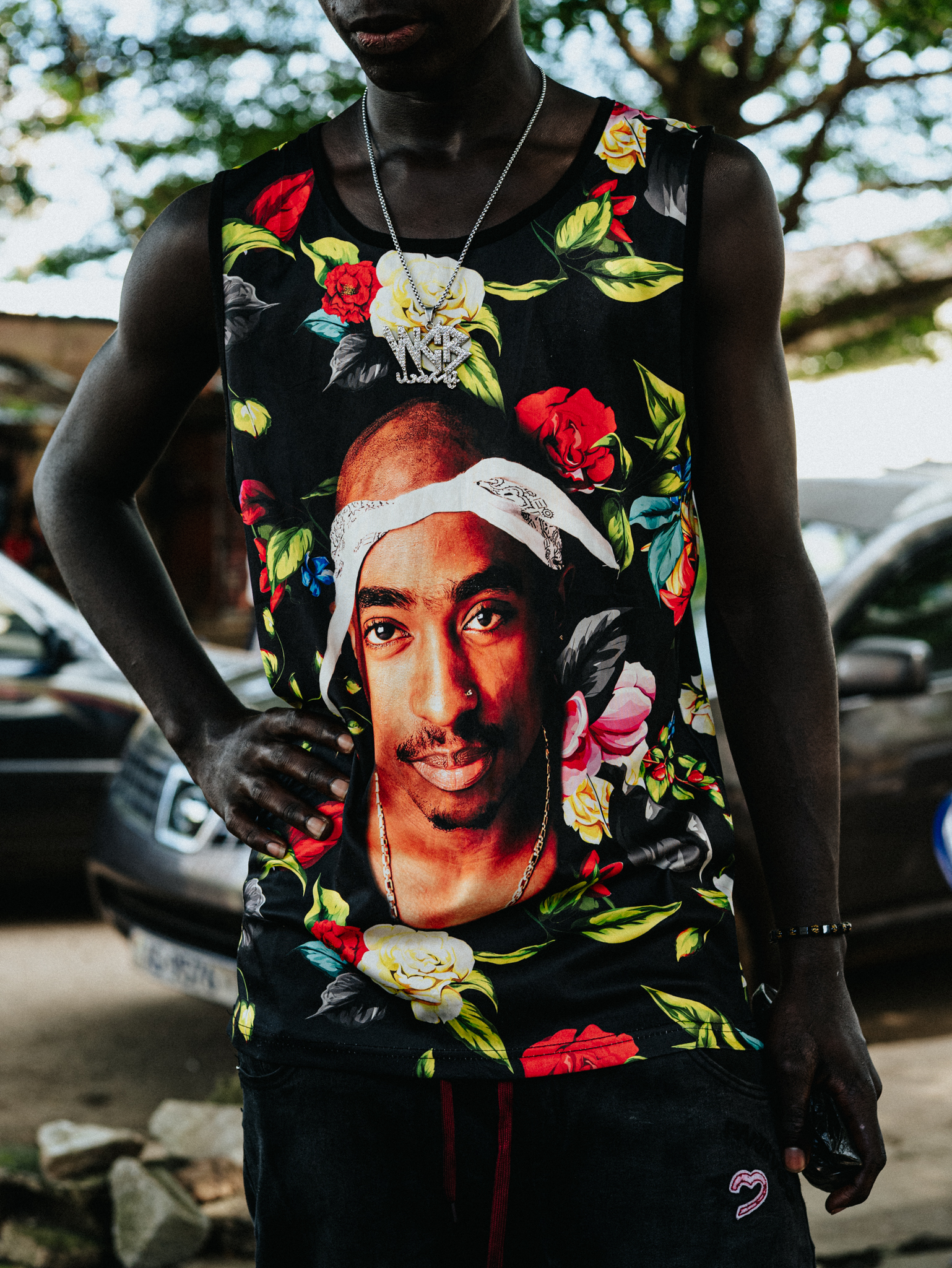
Indeed, if there is one political theorist whose name popped up regularly in my conversations with urban youth in Conakry, it’s Machiavelli. Or perhaps it’s Makavelli, the US rapper Tupac Shakur’s artist’s name on his posthumous album “The Don Killuminati: The 7 Day Theory” (1996). In Conakry, Tupac remains a central icon to this day; his likeness adorns bars, hair salons, minibuses, and T-shirts like in no other Francophone capital in West Africa. The son of Black Panthers activist Afeni Shakur, Tupac spoke out with a vengeance against the oppression and manipulation of black minorities in the US, including by the corrupt music industry (Stanford, 2011). He took his alias after having read Machiavelli’s The Prince in prison in 1994, while making clear that “My name is not Machiavelli, my name is Makaveli. I took it, that’s mine. […] And I don’t feel no guilt. All these motherfuckers stole from us forever, I’m taking back what’s mine.“ Tupac’s indictment of “the system” still resonates with Conakry’s self-proclaimed ghetto youth (Philipps, 2013) in different ways. And although he was critical of the idea of an Illuminati global conspiracy—“I’m putting the K [be]cause I’m killing that Illuminati shit”—the album title “The Don Killuminati” contributed to the Illuminati’s popularity in the global rap scene, and also in Conakry.

Toopaque. Photo: Courtesy of Aurélien Gillier.

The actual secret society of the Illuminati was founded in 1776 by Adam Weishaupt in Ingolstadt, apprehended in 1784 and then ceased to exist as an organization. However, it became famous as the alleged mastermind behind the French Revolution and as usurpers of the social and political order in the United States (Gregory, 2009; McKenzie-McHarg, 2014; Robison, 1798). Akin to the New World Order, the Jewish world conspiracy, and other ideas of all-encompassing domination, the Illuminati are thought to control and steer the major events of our time, while at the same time maintaining a facade of normality.

In Conakry, the Illuminati are generally described as a secret satanic sect of omnipotent and transnationally connected individuals. Their specific identity, their relationship to other groups such as the Freemasons, their involvement in day-to-day politics, and the question of who actually belongs to the Illuminati are controversial.[1]

Before the advent of the Internet, DVDs from neighboring Sierra Leone provided evidence that Bill Gates, Rihanna, Jay-Z, and Beyoncé were Illuminati; at the time, the president and several ministers were suspected of being national Illuminati. One interior minister apparently refused to say explicitly whether he was an Illuminati or not, playing on the mixture of mistrust and awe that surrounds this idea. At the regional level, Malian singer and kora player Sidiki Diabaté, son of kora legend Toumani Diabaté, was regularly questioned about his missing finger, as members were allegedly only accepted into the secret congregation through a kind of sacrifice, often in the form of a body part. Similar suspicions were directed at singer Maître Gims and the late DJ Arafat. However, the specific reasons behind these suspicions often remain vague. In some cases, reference is made to satanic symbols in music videos or combinations of numbers, but, at least in Conakry, there are hardly any concrete events that could be used to prove the Illuminati conspiracy.

Given how deeply Guinea’s history is marked by actual conspiracies, these pop-cultural narratives surrounding celebrities can appear disturbing. Guinea was the only French colony that voted NO in a 1958 referendum to break away from colonial rule instead of becoming part of the West African Communauté Française. Under President Sékou Touré, it became the target of French subversion, starting with the Opération Persil in January 1959 and France’s attempts to destabilize Guinea’s economy by introducing counterfeit banknotes to cause hyperinflation (Bat, 2008; Faligot & Krop, 1985; Goerg & Pauthier, forthcoming; Pierret & Correau, 2018). In November 1970, Portuguese troops marched into Conakry to capture Guinea-Bissau’s anti-colonial leader Amilcar Cabral and overthrow Sékou Touré as part of Operation Mar Verde (Marinho, 2021). Although none of these conspiracies were successful—Touré died of natural causes in 1984—they had a profound effect. The regime was permeated by the idea of a “Complot Permanent” (Lewin, 2009, p. 17), a constant neocolonial, imperialist conspiracy, a danger that also emanated from supposed accomplices and enemies within. Conspiracy theories thus became part of the regime’s institutionalized repertoire for suppressing, intimidating, imprisoning, torturing, and executing real and imagined opposition forces.

Compared to the former imperialist enemy, and contrary to the Manichean worldview that conspiracy theories are said to represent, the Illuminati in Conakry cannot be easily pinpointed and elude clear distinctions. They are not tied to specific locations. Although their power center is still believed to be in the global North, it is increasingly assumed that many Asians are now involved. The term is also remarkably vague in terms of identity characteristics such as gender, ethnicity, or nationality. Potentially, anyone can be an Illuminati, even among the stars that people admire. The enormous range of connotations associated with the Illuminati—evil, fame, money, power, secrecy, sacrifice, transnationalism—opens up a variety of attitudes toward them, from criticism to envy to admiration.
In fact, the aspiration to be part of the Illuminati is being increasingly exploited via the anonymity of social media in a thriving market of deception (see Newell, 2021). A friend of mine, let’s call him Abdoulaye, a rapper with a low-paying job as a substitute teacher, had been contacted via WhatsApp by a foreign profile claiming to be the Maître of an Illuminati lodge in Washington, D.C. The man assured Abdoulaye that he was chosen to be among the richest and most famous people in the world if he joined the Illuminati and followed all the rules with absolute discretion. This ultimately included sending his passport to a foreign address. Abdoulaye refused and broke off contact after two months, but he remained convinced that he had spoken to the real Illuminati and doubted for a long time afterwards whether he should have taken the leap of faith. Another friend told him: “If they [the Illuminati] can give you everything you want for ten years, I’d be willing to sell my soul. Then I can build my mother a villa and everything will be fine, then I can die.”

If we follow Achille Mbembe and Julie Archambault in their assessment, the ambivalence of the Illuminati is all but unique; it is “at the heart of contemporary processes of identity formation in the [African] continent” (Mbembe, 2002, p. 639) and characteristic of “regimes of truth that […] encourage ambiguation over clarification” (Archambault, 2017, p. 15). In such a regime, the Illuminati are not a clearly defined ontological object but a reference point for scepticism: What order is at work here? Who is part of this order? Is it open to me? The lack of clear answers reveals the “inherent fragility” of reality, as Boltanski (2011, p. 36) puts it—but without necessarily leading to existential fears of lack of control (cf. Bauman, 1997, p. xviii). Instead, a playful and ironic relationship with possible truths in the plural often prevails—Saïkou Oumar Sagnane speaks here of an ironic attitude of insouciance that Guineans muster to cope with the hardships of everyday life.[2]

Achille Mbembe (2002, p. 639) attributes it to the “heretical spirit” that lies at the heart of the encounter between Africa and the world, be it in relation to Islamic, Christian, and colonial regimes and knowledge orders.

Each time, reality is erased, recreated, and duplicated. It is this power of proliferation (and its ability to obliterate the notions of truth and falsehood, of the real and the unreal, of the visible and the occult) that characterizes contemporary African experience, which is at least original, if not unique. These characteristics are threefold: an absence of sharp ruptures, a nonlinearity, and everywhere the swirling chain of fragmented events in which everything else is engulfed (Mbembe, 2002, p. 640).

In the case of the Illuminati, the conspiracy theory of the “Illuminati” is turned into a metaphor for a Machiavellian system of money and power that is dramatized on the one hand, but on the other hand is also broken down and opened up, rendered accessible, and thus turned into its opposite. One may wonder whether the “African experience” is in fact so unique after all. The swirling chain of fragmented events seems to be at least one of the dynamics that the world is confronted with in the current post-truth condition. As Boltanski (2014, p. 202) writes about conspiracy theories as reconfigurations of reality: „Such reconfigurations may gradually come to affect the very tenor of reality as a whole, a reality that, paradoxically, tends to dissolve in the multiplicity of probing operations intended to make it hold together.“

,

Fuck the Virus. Photo: Courtesy of Aurélien Gillier.

Stranger than fiction

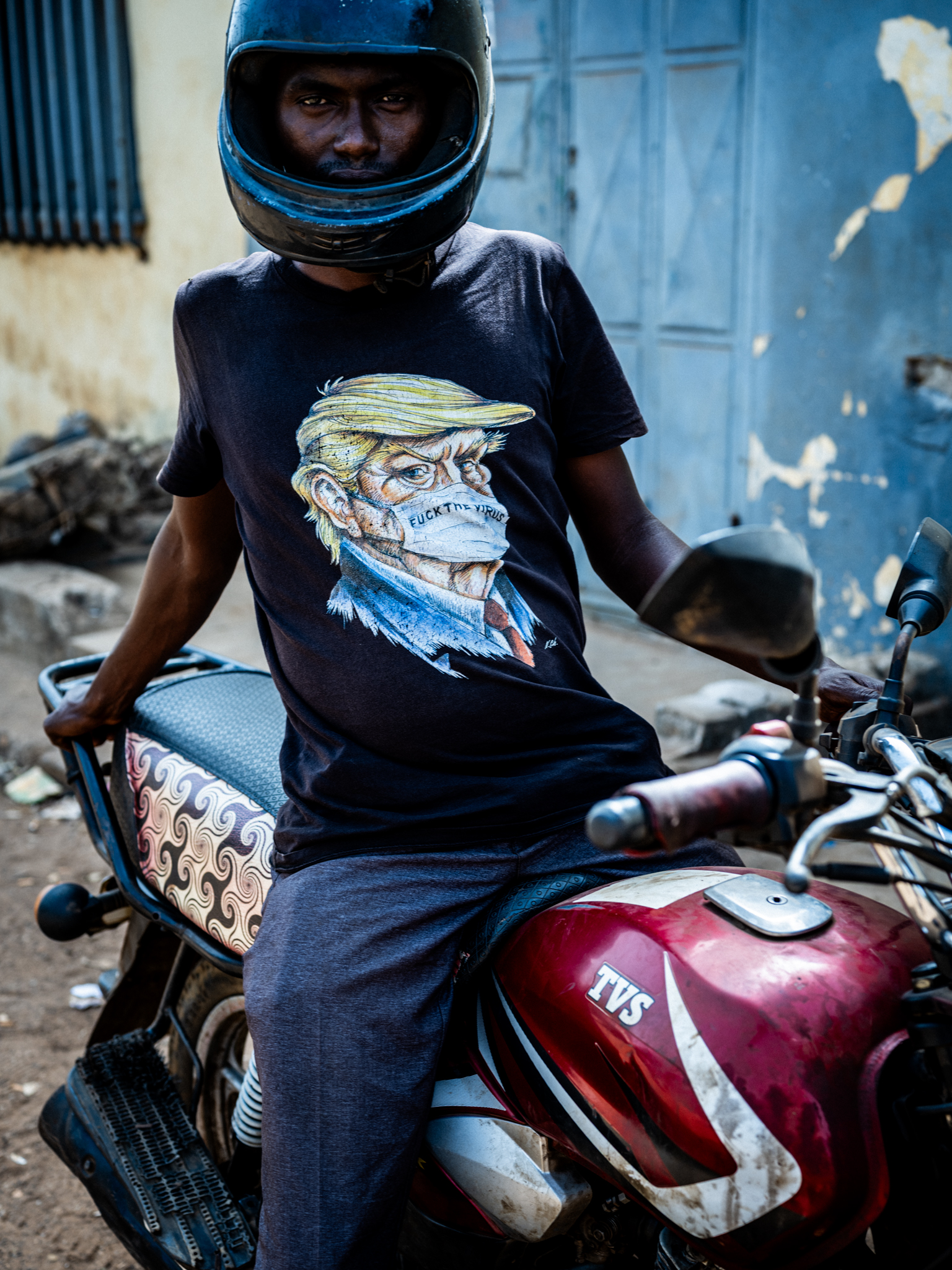
As conspiracy theories and post-truth politics have emerged as “energizing points of attention and contention” (Collins, 1998, p. 876), they are increasingly used as a global frame of reference to analyse contemporary problems at the nexus between power and knowledge. Bespeaking the modern nation-state’s concern over informational hegemony (Alatas, 2022; Boltanski, 2014; Gramsci, 1988; Srivastava, 2012), the perspectives associated with these terms are now entering places where they have hitherto been hardly existant. In Guinea, for instance, NGOs and international organizations have increasingly campaigned against disinformation and rumors, against online hate speech and fake news. Whether these campaigns are helpful needs to be assessed on a case-to-case basis. What they certainly miss out on, however, is that reality is often so absurdly unjust and inequal, that some people rely on some metaphorical satanic sect to make sense of it.

Guinea, and perhaps I should have pointed this out before, is the world’s largest supplier of bauxite, the main ingredient of aluminium; it is also home to the world’s largest undeveloped, high-grade iron ore deposit, the Simandou mine (Campbell & Clapp, 1995; Knierzinger, 2018). At the same time, Guinea is one of the poorest countries in the world, and thus home to a what Guineans like to call a geological scandal that persists despite uncountable strikes and protests against both the mining companies and the state that protects them (Philipps, 2017; Sarró, 2023). In the “corruption deal of the century” surrounding the Simandou mine (Keefe, 2013; Kochan, 2013), the now-convicted Nicolas Sarkozy represented the currently indicted Israeli investor Beny Steinmetz. The annual profits of mining companies such as Rusal or Rio Tinto are in some cases ten times higher than Guinea’s budget; individual shareholders in these companies have private assets amounting to the annual income of all Guineans combined; singular investors, and even individual persons, can make decisions about the “fate of millions by telling their companies to stop the machines, without breaking any laws” (Knierzinger, 2014, p. 26). The absence of any organized high-level debate about these realities is arguably more problematic than the falsehoods that circulate.

What can global sociology do in such a context? For one, it can help contextualize and “provincialize” the post-truth problem. It can shape a more humble sociological stance by alerting us to the fact that “Northern theory” and its claims to universality (Connell, 2006) often stand in the way of a more lateral approach to universality (Diagne, 2023). It can be drawn upon to translate what concepts such as “conspiracy theories” mean in different spaces and places of the world, and to study how to re-conceptualize the phenomenon of believing in malevolent secret powers as the cause behind harmful events. Concepts, as Macamo (2022) reminds us, ultimately “hide more than they reveal,” and working at the interstices of what allows and evades conceptual capture (Simone, 2022) is necessary to do empirical qualitative research in a context where, as Kovats-Bernard put it, “the ‘stability in the ethnographic field’ once guaranteed by colonial power no longer holds” (cited in Andersson, 2016, p. 708). Such reservations, finally, do not mean that we need to dissociate ourselves from debates about post-truth and conspiracy theories. As ‘the West’ has ceased to be the world’s center of gravity (Comaroff & Comaroff, 2012; Connell, 2006, 2007; Mbembe, 2013, p. 1), the destabilization of hitherto dominant knowledge systems is very much part of what “post-truth” is about.

[1] The following notes are based on interviews and conversations in Conakry and over the phone since 2017, especially with Ams Keuche, Nana Barry and Fiston. Some of it stems from my previous work on Conakry’s urban youth (Philipps, 2013).


[2] Conversation with Saïkou Oumar Sagnane, Conakry, March 2022. See also Sagnane (2024).
Cite this article as: Philipps, J. (2026, February 5). Illuminati in Conakry: On post-truth, conspiracy theories, and the majority world. Global Qualitative Sociology Network. https://global-qualitative-sociology.net/2026/02/05/illuminati-in-conakry/

References

 
Alatas, S. F. (2025). Knowledge hegemonies and autonomous knowledge. Third World Quarterly, 46(18), 2485–2502. https://doi.org/10.1080/01436597.2022.2124155
 
Andersson, R. (2016). Here be dragons: Mapping an ethnography of global danger. Current Anthropology, 57(6), 707–731. https://doi.org/10.1086/689211
 
Anton et al. (2014). Einleitung: Wirklichkeitskonstruktion zwischen Orthodoxie und Heterodoxie—Zur Wissenssoziologie von Verschwörungstheorien. In A. Anton, M. Schetsche, & M. K. Walter (Eds), Konspiration: Soziologie des Verschwörungsdenkens (pp. 9–25). Springer VS.
 
Aradau, C., & Huysmans, J. (2019). Assembling credibility: Knowledge, method and critique in times of ‘post-truth.’ Security Dialogue, 50(1), 40–58. https://doi.org/10.1177/0967010618788996
 
Archambault, J. S. (2017). Mobile secrets: Youth, intimacy, and the politics of pretense in Mozambique. University of Chicago Press.
 
Ball, J. (2017). Post-truth: How bullshit conquered the world. Biteback Publishing.
 
Bat, J.-P. (2008). Le syndrome Foccart: La politique française en Afrique, de 1959 à nos jours. Editions Gallimard.
 
Bauman, Z. (1997). Postmodernity and its discontents. Polity Press.
 
Boltanski, L. (2011). On critique: A sociology of emancipation. Polity Press.
 
Boltanski, L. (2014). Mysteries and conspiracies: Detective stories, spy novels and the making of modern societies. Polity Press.
 
Boukari, O., & Philipps, J. (2023). «Complòóót?» Theorizing about Covid-19 conspiracies in Côte d’Ivoire. In P. Knight & M. Butter (Eds), Conspiracy theories and the coronavirus pandemic (pp. 114–127). Routledge.
 
Campbell, B., & Clapp, J. (1995). Guinea’s economic performance under structural adjustment: Importance of mining and agriculture. The Journal of Modern African Studies, 33(3), 425–449.
 
Carey, M. (2017). Mistrust: An ethnographic theory. University Of Chicago Press.
 
Collins, R. (1998). The sociology of philosophies: A global theory of intellectual change. Belknap Press of Harvard University Press.
 
Connell, R. (2006). Northern theory: The political geography of general social theory. Theory and Society, 35(2), 237–264. https://doi.org/10.1007/s11186-006-9004-y
 
Cooper, E., & Pratten, D. (Eds). (2015). Ethnographies of uncertainty in Africa. Palgrave Macmillan.
 
Dentith, M. R. X. (2019). Conspiracy theories and philosophy. Bringing the epistemology of a freighted term into the social sciences. In J. E. Uscinski (Ed.), Conspiracy theories and the people who believe them (pp. 94–108). Oxford University Press.
 
Diagne, S. B. (2023). What might a truly universal universalism be? Thinking the universal with Étienne Balibar. In M. Messling & J. Tinius (Eds), Minor universality: Rethinking humanity after western universalism [Universalité mineure: penser l’humanité après l’universalisme occidental] (pp. 35–42). De Gruyter.
 
Douglas, K. M., Uscinski, J. E., Sutton, R. M., & Cichocka, A. (2019). Understanding conspiracy theories. Political Psychology, 40(1), 3–35. https://doi.org/10.1111/pops.12568
 
Drążkiewicz, E., & Harambam, J. (2024). Introduction: Moving beyond debunking to better deal with conspiratorial movements, misinformation and post-truth. In What to do about conspiracy theories? Academic entanglements in conflicts over truths. Routledge.
 
Faligot, R., & Krop, P. (1985). La Piscine: Les services secrets français, 1944-1984. Editions du Seuil.
 
Flood, A. (2016, November 15). ‘Post-truth’ named word of the year by Oxford Dictionaries. The Guardian. https://www.theguardian.com/books/2016/nov/15/post-truth-named-word-of-the-year-by-oxford-dictionaries
 
Fuller, S. (2018). Post-truth: Knowledge as a power game. Anthem Press.
 
Goerg, O., & Pauthier, C. (2025). Aux origines de l’obsession complotiste en Guinée, années 1940–1961. In J. Philipps & A. Gillier (Eds), Politics of the unknown. Images of power and the power of images. iwalewabooks.
Gramsci, A. (1988). Gramsci’s prison letters: A selection. Swan.
 
Gregory, S. (2009). Wissen und Geheimnis: Das Experiment des Illuminatenordens. Stroemfeld.
 
Hess, D. J. (2020). The sociology of ignorance and post-truth politics. Sociological Forum, 35(1), 241–249. https://doi.org/10.1111/socf.12577
 
Hofstadter, R. (1964, November). The paranoid style in American politics. Harper’s Magazine. https://harpers.org/archive/1964/11/the-paranoid-style-in-american-politics/
 
Keefe, P. R. (2013, July 8). Buried Secrets. The New Yorker. http://www.newyorker.com/magazine/2013/07/08/buried-secrets
 
Knierzinger, J. (2014). The socio-political implications of bauxite mining in Guinea: A commodity chain perspective. Extractive Industries and Society, 1(1), 20–27. https://doi.org/10.1016/j.exis.2014.01.005
 
Knierzinger, J. (2018). Bauxite mining in Africa: Transnational corporate governance and development. Springer International Publishing, Imprint: Palgrave Macmillan.
 
Kochan, N. (2013, June 17). The corruption deal of the century: How Guinea lost billions of pounds in Simandou mining licensing. The Independent. http://www.independent.co.uk/news/world/africa/the-corruption-deal-of-the-century-how-guinea-lost-billions-of-pounds-in-simandou-mining-licensing-8662534.html
 
Latour, B. (1987). Science in action: How to follow scientists and engineers through society. Harvard University Press.
 
Latour, B. (2004). Why has critique run out of steam? From matters of fact to matters of concern. Critical Inquiry, 30(2), 225–248. https://doi.org/10.1086/421123
 
Lewin, A. (2009). Ahmed Sékou Touré: (1922–1984): Président de la Guinée de 1958 à 1984. L’Harmattan.
 
Macamo, E. (2022, May 21). In search of an object: Producing knowledge on the global south. Doing global sociology: Methodology and theory after the postcolonial critique, University of Göttingen.
 
Marinho, A. L. (2021). Operação mar verde: Um documento para a história. Temas e Debates.
 
Mbembe, A. (2002). On the power of the false. Public Culture, 14(3), 629–641.
 
Mbembe, A. (2013). Critique de la raison nègre. Decouverte.
 
Mbembe, J. A. (2001). On the postcolony. University of California Press.
 
McKenzie-McHarg, A. (2014). The transfer of anti-Illuminati conspiracy theories to the United States in the late eighteenth century. In M. Butter & M. Reinkowski (Eds.), Conspiracy theories in the United States and the Middle East (pp. 231–250). De Gruyter.
 
Newell, S. (2012). The modernity bluff: Crime consumption, and citizenship in Côte d’Ivoire. The University of Chicago Press.
 
Newell, S. (2021). Decolonizing science, digitizing the occult: Theory from the virtual south. African Studies Review, 64(1), 86–104. https://doi.org/10.1017/asr.2020.87
 
Orr, M., & Husting, G. (2019). Media marginalization of racial minorities: “Conspiracy theorists” in U.S. ghettos and on the “Arab street.” In J. E. Uscinski (Ed.), Conspiracy theories and the people who believe them (pp. 82–93). Oxford University Press.
 
Parker, M. (2000). Human science as conspiracy theory. The Sociological Review, 48(S2), 191–207. https://doi.org/10.1111/j.1467-954X.2000.tb03527.x
 
Philipps, J. (2013). Ambivalent rage: Youth gangs and political protests in Conakry, Guinea. Éditions L’Harmattan.
 
Philipps, J. (2017, February 27). Strike and upheaval: The myth of trickle-down, Guinea edition. African Arguments. http://africanarguments.org/2017/02/27/strike-and-upheaval-the-myth-of-trickle-down-guinea-edition/
 
Philipps, J., & Gillier, A. (2024). Modalities of theorizing. An interdisciplinary reflection on conspiracy theories. University of Bayreuth African Studies Online Series (BASOS).
 
Pierret, C., & Correau, L. (2018). Guinée, Avril-Mai 1960: Le complot fondateur. In FIDH & RFI (Eds), Mémoire collective: Une histoire plurielle des violences politiques en Guinée (pp. 110–137). Fédération internationale des ligues des droits de l’homme.
 
Popper, K. R. (1962). Introduction: On the sources of knowledge and of ignorance. In Conjectures and refutations: The growth of scientific knowledge (pp. 3–32). Basic Books.
 
Robison, J. (1798). Proofs of a conspiracy against all the religions and governments of Europe, carried on in the secret meetings of Free Masons, Illuminati, and reading societies (4th ed.).
 
Sagnane, S. O. (2024). Hegemonic knowledge and situated knowledge: A conceptual and epistemological clarification for researchers in Guinea. Journal of International Students, 14(2). https://doi.org/10.32674/jis.v14i2.6385
 
Sarró, R. (2023). The inversion of tradition: Generational transformations on a mining frontier. Politique Africaine, 169(1), 79–98. https://doi.org/10.3917/polaf.169.0079
 
Simone, A. (2008). Emergency democracy and the “governing composite.’’ Social Text, 26(2), 13–33. https://doi.org/10.1215/01642472-2007-027
 
Simone, A. (2022). The surrounds: Urban life within and beyond capture. Duke University Press.
 
Srivastava, N. F. R. (2012). The postcolonial Gramsci. Routledge.
 
Stanford, K. L. (2011). Keepin’ it real in Hip Hop politics: A political perspective of Tupac Shakur. Journal of Black Studies, 42(1), 3–22. https://doi.org/10.1177/0021934709355122
 
Uscinski, J. E. (2019). What is a conspiracy theory? In J. E. Uscinski (Ed.), Conspiracy theories and the people who believe them (pp. 47–52). Oxford University Press.
 
Veriava, A. (2025, July 8). Frank-Talking: Biko, Foucault, and the possibilities of telling the truth in a post truth world. 5th ISA Forum of Sociology, Rabat, Morocco.
 
Wagner-Pacifici, R. (2000). Theorizing the standoff: Contingency in action. Cambridge University Press.

Leave a comment

Your email address will not be published. Required fields are marked *