
Yvonne Berger, Rosenheim University of Applied Sciences
The blog post explores how class and gender relations are negotiated and reproduced in urban Chinese marriage markets, centring in major Chinese cities. China’s traditional marriage markets – known as xiangqingjiao (相亲角) – are common events in many cities nationwide and across South and Southeast Asia. The phenomenon can also be observed in other well-known Chinese cities such as Nanjing, Chongqing, or Beijing. In the following, I argue that parental matchmaking practices function as exchanges of economic, cultural, and social capital, exposing the typically hidden logics of (heterosexual) homogamy and social reproduction. Mothers are portrayed as key figures bearing a disproportionate burden of emotional and organisational labour, while also navigating significant stigmas related to “leftover” men and women, within a setting of imbalanced sex ratios and rapid changes of modernisation.
By comparing Chinese public marriage markets with algorithmic partner selection and educational homogamy in Western societies, the blog post argues that China is not an exception but a clear example of global patterns linking love, class, and gender in urban cities.
Over the past fifty years, the People’s Republic of China (PRC) has experienced significant societal and economic shifts. These changes are linked to restructuring initiatives aimed at the Chinese demographics and social policies. To sum up, China has experienced two rapid transformations: a demographic decline characterized by decreasing fertility and marriage rates, and an economic shift from a planned to a market-driven economy. Driven by institutional reforms and continuous economic development, more young Chinese are pursuing higher education and focusing on prosperity and careers. The dynamic city of e.g. Shanghai exemplifies this transformation like no other megacity—over three decades, it has become home not only to local residents but also to an increasing number of migrant workers and international and domestic companies, all contributing to the city’s vibrant life with a strong colonial history. The Opium War in 1842 transformed Shanghai into different foreign concessions, and extraterritorially allowed these colonial powers to govern their enclaves independently of Chinese law, leaving behind architectural and social changes that continue to shape the city today.
On a Sunday afternoon in People’s Square Park in Shanghai, hundreds of parents gather, while people come to watch the lively scene. They read notes — small, laminated cards hanging from umbrellas or spread out on the ground, covered with numbers, years, and square metres of prospective apartments. Age: 30. Annual income: 400,000 RMB. Apartment: available. Hukou (the Chinese household registration system): urban. Yet anyone who reads those cards immediately recognises an implicit logic that far exceeds romantic feelings. Profiles rarely inquire about hobbies or favourite films and food. The currency of the market is capital, in the most literal sociological sense.
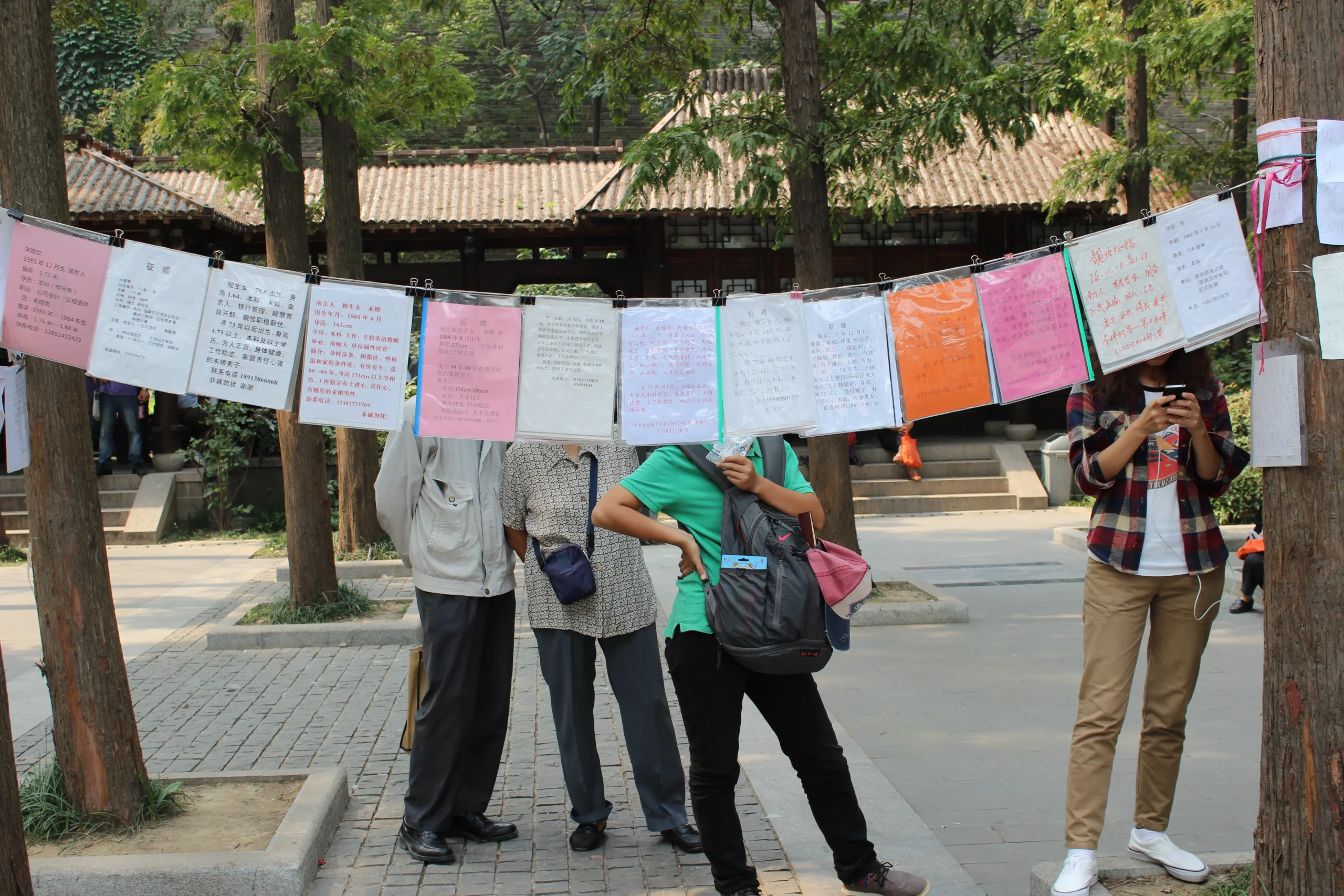
Written ads, Nanjing. Photo: Yvonne Berger.
The Logic of Marketization: Capital, Habitus, and Social Reproduction
Pierre Bourdieu argued that societies reproduce themselves without anyone explicitly planning it (Bourdieu, 1984). People do not marry by chance. Statistically, they marry within their social class — not because they are calculating, but because their habitus, their deeply internalised dispositions, of who “belongs” with whom, draws these boundaries precisely. The marriage market in People’s Square makes visible what otherwise remains invisible: it records those dispositions on pieces of paper. In respect of social class, a notable level of general class consciousness is evident among the Chinese population. Social belonging is a common topic on television, newspapers, and official government programmes. Class consciousness here does not correspond to what Karl Marx understood as the middle class, namely, a group that is largely insignificant in the class struggle. Instead, it is conceived as an initially loose, everyday-life category in China, within which growing perceptions of cultural and social differences among the middle classes are seen as a fundamental precondition for the transmission of forms of capital in Bourdieu’s sense.
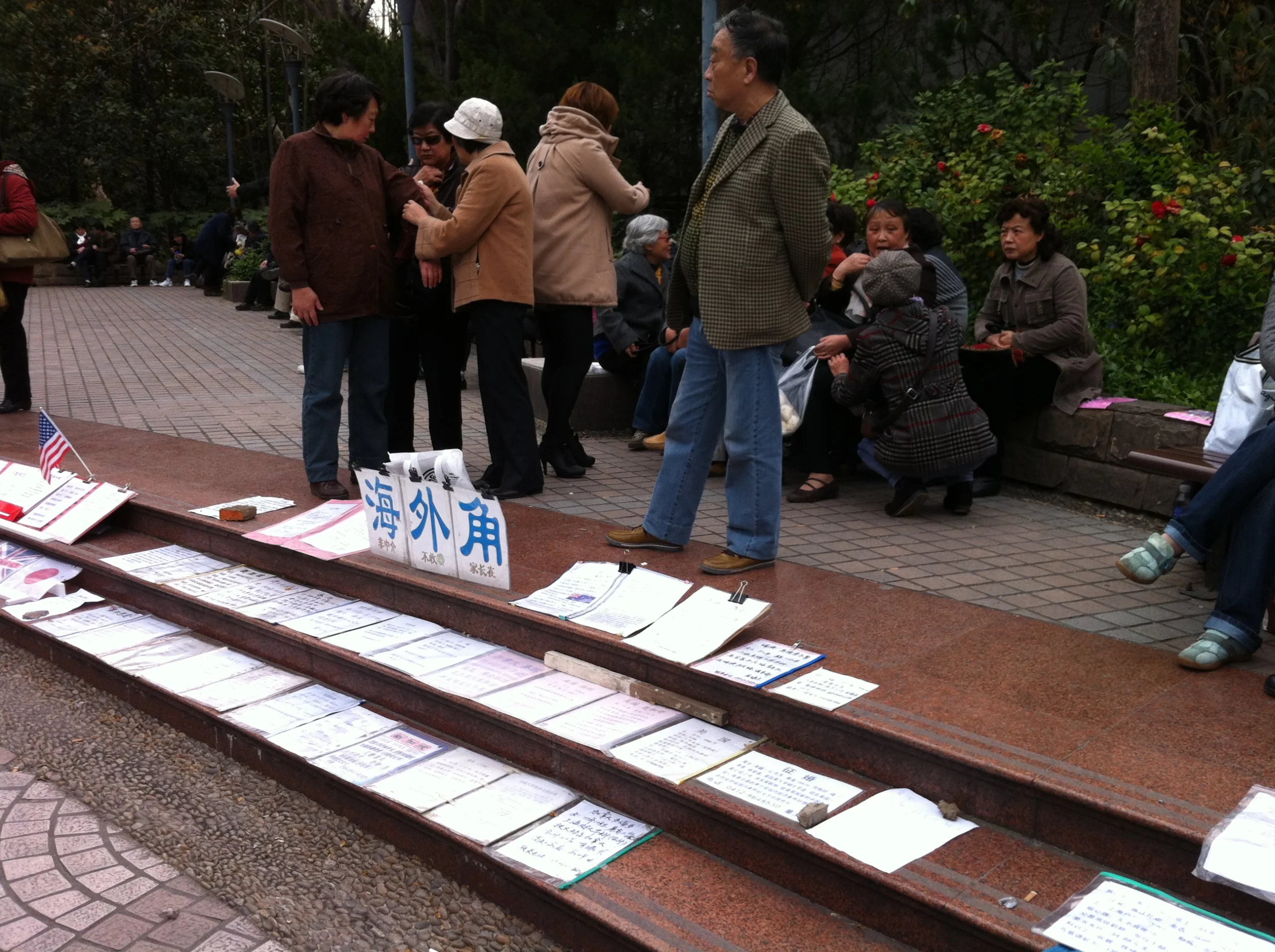
“Overseas corner”, People’s Park Shanghai. Photo: Yvonne Berger.
Moreover, in everyday discourses, the so-called working class is paradoxically expected to avoid being left behind while simultaneously not being part of the functional elites in an anticipated process of capitalist modernization. Here, being “left behind” is a common discourse in everyday China, especially in the context of education. Income, education and hukou are forms of capital that are traded and compared (Toft & Jarness, 2021). An apartment in Jing’an, Shanghai, is worth more than one in Baoshan. A degree from Fudan University carries more weight than one from a provincial college. The market even maintains its own “overseas zone”, where parents of children with international experience gather separately.
Following Bourdieu’s idea that shared capital and similar habitus bring people closer, increasing the likelihood of falling in love (Atkinson, 2024), the park simply makes explicit what elsewhere functions through taste and aesthetic affinity. Marriage markets are not part of a global trend reflected in divorce rates or partnership figures. They are an interesting phenomenon when looking at general statistics: In 2024, the global divorce rate was about 1.6 per 1,000 people. Early 2025 data indicate a slow ongoing decline in both marriage and divorce rates across many regions. Countries like India, Vietnam, Sri Lanka, Peru, and South Africa have some of the lowest divorce rates worldwide. According to Statista Research Department, 59% of people in Germany are in a relationship or married, compared to 63% in Great Britain, 63% in Brazil, and around 49- 50% in the USA and South Africa (ages 18–64). Interestingly, South Africa and the US have high numbers of singles, while in China, 81% of respondents are married – the highest share among major economies surveyed — yet marriage rates in urban centres are declining, and divorce rates in cities like Beijing and Shanghai can approach 40 percent (Wang & Guo, 2024). Furthermore, the global online dating sector is expanding, with revenues anticipated to reach significant levels by 2026, driven by urbanisation and changing cultural attitudes (Statista Research Department, 2025). These figures indicate not the decline of marriage as an institution, but its continuous renegotiation amidst rapid social change.
The notion of romantic love, which often results in marriage and family, creates compatibility conflicts with the biographical realities of later generations in the so-called global cities (Sassen, 2006), despite the rise of dating services, changing cultural values, and the increasing rate of non-marriage cohabitation (Zhou, 2022; Wang & Kan, 2021).

“Overseas corner”, People’s Park Shanghai. Photo: Yvonne Berger
Class Trouble and the Emotional Labour of Mothers: Care, Pressure, and the Sheng Nu/Nan Stigma
Anyone who spends time at the xiangqinjiao notices that it’s frequented almost exclusively by middle-aged parents, predominantly mothers. The children concerned are often absent, and sometimes entirely unaware that their mother is there on their behalf (Fung, 2015). Arlie Hochschild (1989) already demonstrated long ago that emotional labour — the management of feelings, relationships, and social expectations — is unevenly distributed across gender lines and is disproportionately performed by women. At the xiangqinjiao, mothers shoulder an immense burden of care work. They research potential partner matches, make contacts with other parents, and bear the pressure of caring for two generations simultaneously. Their goal is not to undermine their children’s autonomy, but to care for their futures and protect against the risks of poverty, social class decline, and the shengnu/nan stigma that continues to affect unmarried women and men over 30 in contemporary China. Since the male-to-female sex ratio at birth has been rising over the past 30 years, unmarried women and men are today labelled as shengnu or shengnan (剩女/剩男), which literally means “leftover women/men” (To, 2013). This term is primarily used in public discourse about women. Most of the women are well educated and have decent jobs. Conversely, men are forced to provide a high income and an apartment if they wish to succeed as potential husbands. They are named guanggun (光棍), meaning “bare stick”, referring to those who cannot continue the family lineage, especially in rural areas. The deep-rooted structural factors reinforcing those stigmata are significant. Gao et al. (2022) show that from 1996 to 2017, China’s average sex ratio at birth remained above 1.06. About seven out of every hundred Chinese men may not find a marriage partner. The former one-child policy, combined with a cultural preference for sons, created a significant male surplus in rural and lower-income areas. Conversely, in major cities like Shanghai and Beijing, the situation is reversed: highly educated, professionally successful women face a narrower pool of men considered socially “equivalent” according to current market standards. Simultaneously, many young urban Chinese experience a clear tension. They have internalized global ideals of romantic love and personal partner choice, but still face significant family and societal pressure.
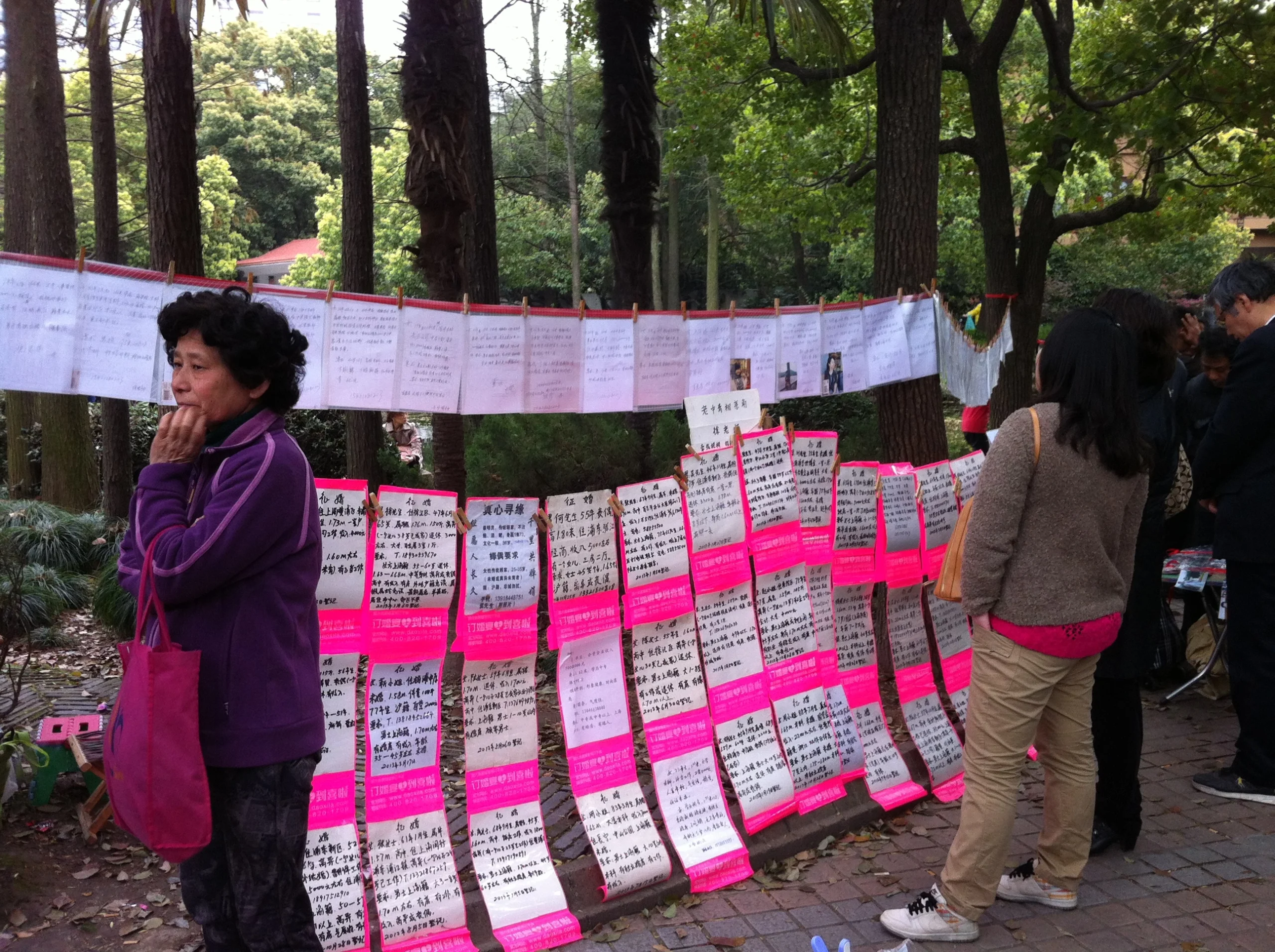
Written ads, Nanjing. Photo: Yvonne Berger.
Class Reproduction with Chinese Characteristics? A Comparative Global Perspective
It is overly simplistic to view the xiangqinjiao as solely a Chinese phenomenon. In Europe and the U.S., people predominantly partner within their own educational classes—reflecting a pattern known as assortative mating or educational homogamy, observed in many countries. Recent studies suggest that the educational level is the most significant predictor of partner choice, even more than income, regional origin, or personality (Hirschl et al., 2024). What Western societies hide behind algorithmic “compatibility scores” in online dating and narratives of shared interest is openly displayed on laminated cards in Chinese cities. The park shows us what remains hidden elsewhere, namely that the person we experience as our “perfect match” usually speaks the same language, attended equivalent schools, and holds comparable assets. Similar institutional forms can be found in other East Asian societies dealing with declining fertility and delayed marriage. In Japan, community- and NGO-led matchmaking events called konkatsu (婚活) serve a similar purpose, highlighting regional demographic concerns. The Chinese situation is notable for its scale, public nature, and the way the market becomes a space for shaping a uniquely Chinese modernity.
Glocalization of Class & Gender: Dating in the Age of Global Cities
Over the past fifty years, the People’s Republic of China has experienced multiple social and economic changes. These changes are most evident in cities like Shanghai, which has been a hub for internal migrants, international companies, and globally mobile professionals for the past thirty years. The social landscape here is distinctly “glocal” — deeply rooted in local norms while also influenced by global trends (Khondker, 2004; Robertson, 1995; Sassen, 2006). The quest for romantic partners transcends geographic borders, creating tension between local marriage traditions and globalized dating customs. In major cities, people select partners based on cultural influences but are increasingly driven by international perspectives and digital media, resulting in relationships that are both locally rooted and globally connected. The idea of glocalization explains how local practices evolve, resist, or change under global influence. Urban marriage markets illustrate this interplay: parents still visit the xiangqinjiao while their children use international dating apps; traditional criteria, such as capital compatibility, remain relevant alongside modern aspirations for romantic love. Digital platforms broaden the search for partners but do not eliminate the social pattern of homogamy—they simply extend and accelerate it.
Conclusion
Economic modernization and increased educational mobility have drawn millions of young women and men into China’s cities. Gender roles have shifted significantly: women more often report stronger natal ties and question the traditional patrilineal family model. However, the expectation that a prospective husband provides a marital home demonstrates the continued influence of traditional values even amid deeply changed social circumstances (Zhou & Wang, 2024).
The concept of romantic love, understood as a feeling that naturally leads to marriage and family, often conflicts sharply with the biographical realities of generations living in global cities. Long working hours, high living costs, and career imperatives lead many urban singles to delay marriage and parenthood. The integration of work and personal life is increasingly mediated by technology, as dating applications enable individuals to seek partners whose lifestyles align with their professional commitments.
This is the situation Hochschild diagnosed as the “stalled revolution” (Hochschild, 1989): formal gender equality in education and the labour market has not been accompanied by a commensurate redistribution of care work, domestic labour, or the emotional labour of relationship maintenance. At the xiangqinjiao, the stall is literally embodied in the figure of mothers who search on behalf of a child.
The rise of the shengnu phenomenon further illustrates the paradox: highly educated professional women remain unmarried not from lack of choice, but because they encounter a limited range of partners who meet their educational and professional standards, while simultaneously facing societal pressure that frames their situation as failure (Zhou, 2022). This reflects what Abrahamson (2015) describes as the gendered constraints of changing social landscapes, in which traditional patriarchal norms and modern aspirations for individual achievement meet in productive tension. Chinese marriage markets reveal the underlying logics that are often hidden elsewhere: how capital influences partner choices, the gender-specific division of caregiving and emotional labour, and the balancing act between family duties and personal independence in China.
From a broader sociological perspective, the marriage market in Chinese urban cities offers insights into phenomena that extend beyond China. The dynamics seen at the xiangqinjiao reflect broader trends: when urbanization gathers mobile, educated people into competitive labour markets; when global ideas of romantic love intersect with local class and gender structures; and when family formation is delayed, negotiated, or renegotiated amid economic uncertainty.
References
Abrahamson, M. (2015). Urban enclaves: Identity and place in the world. St. Martin’s Press.
Bourdieu, P. (1984). Distinction: A social critique of the judgement of taste. Harvard University Press.
Fung, L. (2015). The marriage market of Shanghai’s People’s Park. University of Nottingham.
Hochschild, A. R., & Machung, A. (1989). The second Shift: Working families and the revolution at home. Penguin Publishing Group.
Khondker, H. (2004). Glocalization as globalization: Evolution of a sociological concept. Bangladesh E-Journal of Sociology, 1(2), 1–9.


Johannes Becker, Leibniz-Zentrum Moderner Orient
Eight hundred meters, or a ten-minute walk: that is the distance between Marian Burchardt’s apartment and mine in Berlin. Over the past years, we have been coordinating the research network whose blog you are currently reading, and we have more than once joked with others in the network that we are running Global Sociology from a tiny neighborhood in Berlin, Alt-Treptow, with a population of roughly 13,500. But there is something to this joke. Space matters in Global Sociology, and so does positionality. So, what does Alt-Treptow, the little neighborhood where we live, and the fact that we live here, tell us about Global Sociology?
Consider this a small exercise in glocalization – a way of grounding long-term globalization processes in concrete spaces or of exploring the role local spaces have in globalization (Massey, 1994; Robertson, 1995). The result is a Global Sociology of the very local with the aim of emphasizing that Global Sociology is not “simply” about the Global South as the forgotten space of sociology, but it can also be about the many processes that have contributed to making the social world as it is now, with the reproduction of power relations between various regions, the processes of exchange of people, ideas and goods, and the (in)visibility of these processes in everyday life in the Global North.
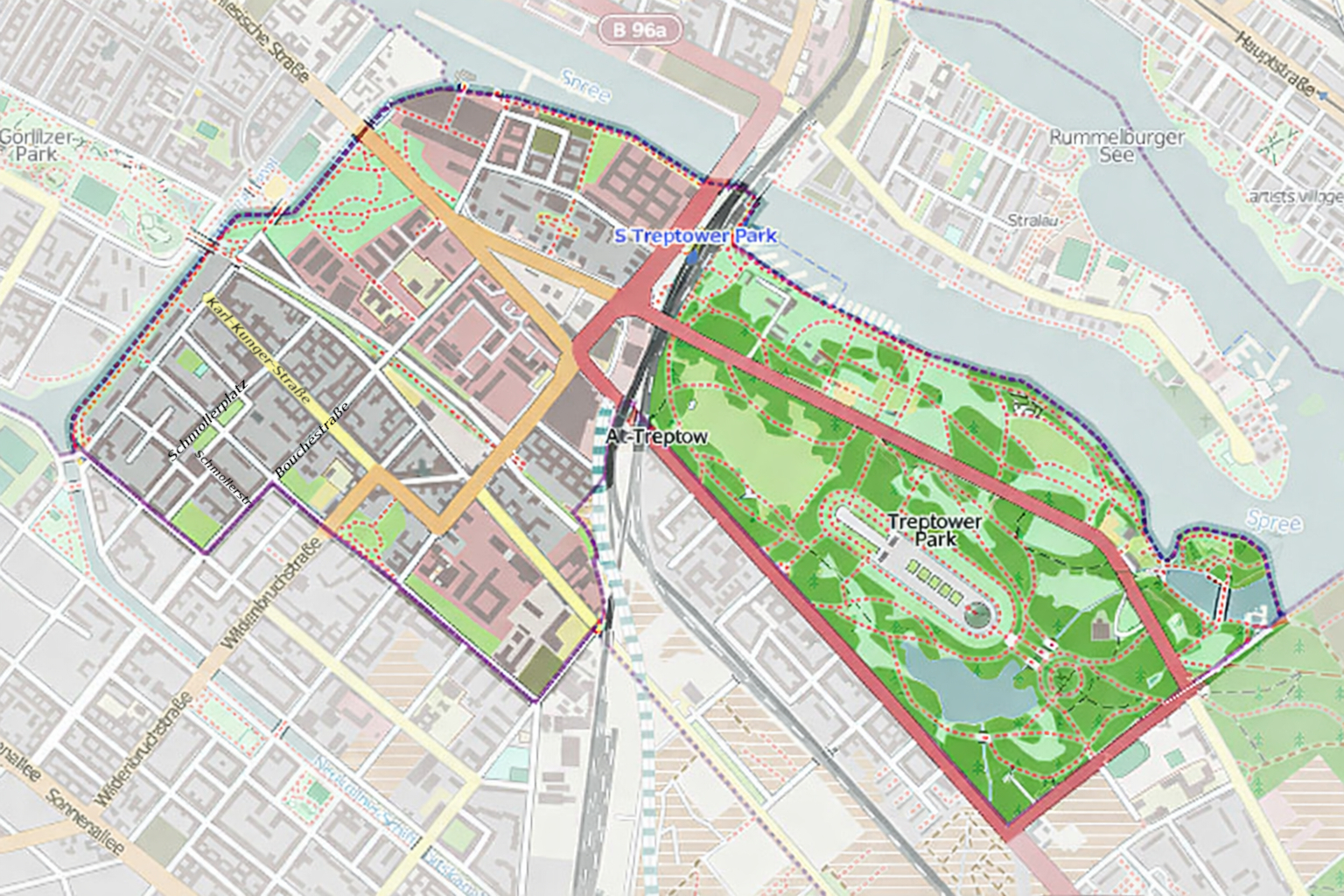
Map of Alt-Treptow and Treptower Park, modified, based on Wikipedia.
Huguenots, Human zoos, global confrontation, gentrification
Marian lives in Bouchéstraße, named after a Huguenot family who arrived in Berlin from Bonnay in the French Champagne in the late seventeenth century, together with roughly 6,000 others who were welcomed to Brandenburg-Prussia after being persecuted during the Catholic Counter Reformation in France, one of many movements of religious refugees at the time. The Huguenots shaped Berlin to an extraordinary extent: before their arrival, the city had about 20–25,000 inhabitants, and the newcomers soon made up around fifteen percent of the population. They were seen as economically skilled and “civilized,” contributing to the city’s development, but also provoking jealousy among long-established Berliners who felt they received undue privileges. Johann Peter Paul Bouché (1759–1846), great-grandson of the first Bouchés in Berlin, was honored with the street name in Alt-Treptow because he transformed nearby land along the river Spree into a horticultural enterprise (“geregelte Anpflanzung von Gehölzen bei Treptow“/ “planned planting of wooded areas in Treptow”) that would later form the grounds of Treptower Park, one of Berlin’s famous green lungs. This very local detail makes it clear that the emerging capital of the German Empire was anything but “purely Germanic.” Yet these origins are largely invisible today, mostly known only to specialists. Even I was unaware of the street name’s history before I started this little investigation.
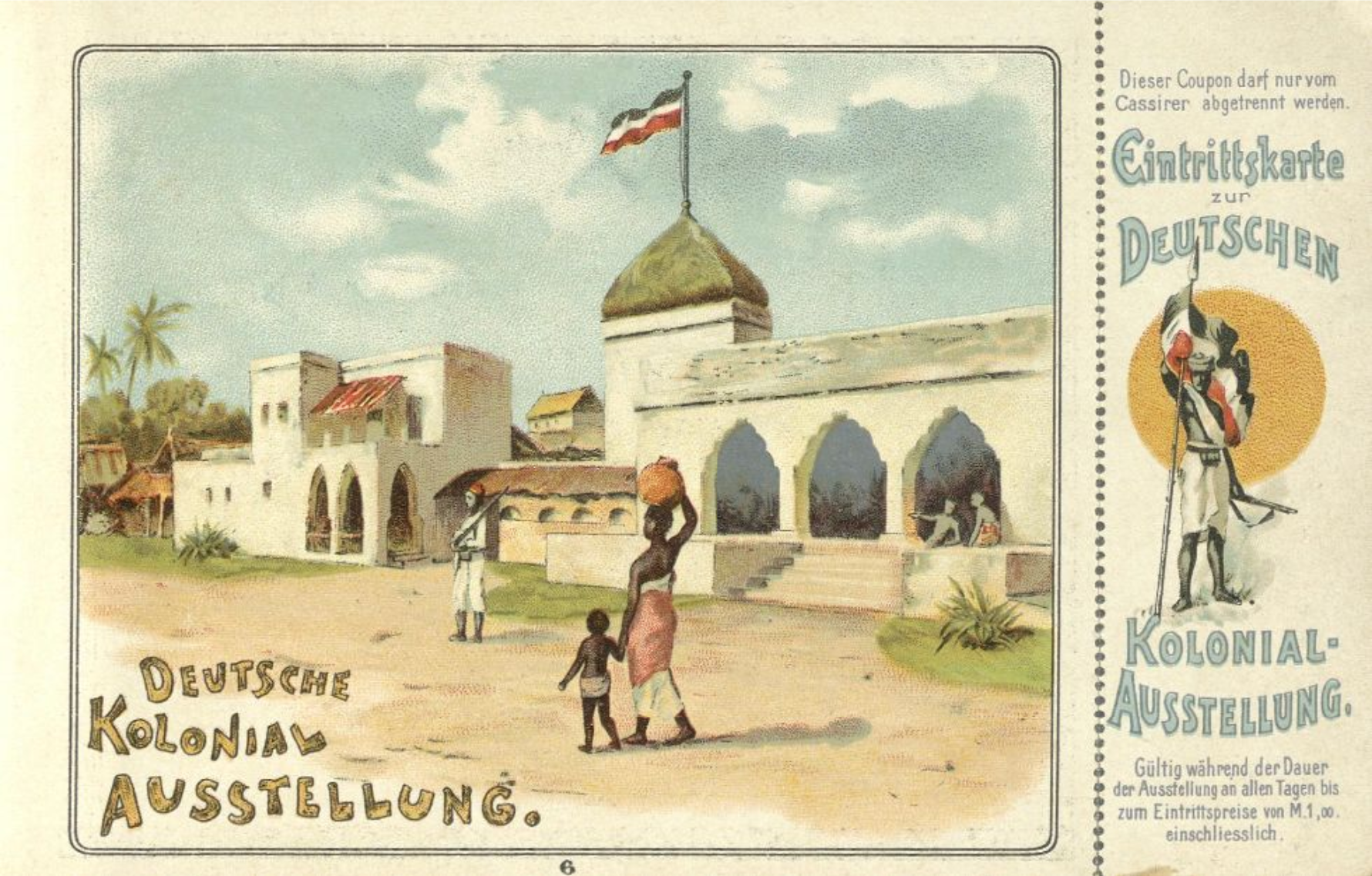
In 1896, the same Treptower Park became the site of the Große Berliner Gewerbeausstellung (Great Industrial Exposition of Berlin), a huge exhibition, the German version of the World’s Fairs that Berlin never officially hosted. Alongside spectacular displays of industrial modernity, the exhibition featured the Berliner Kolonialausstellung (Berlin Colonial Exhibition), and in this frame an “African village” for which families from German colonies were brought to Berlin, 106 persons in total, and asked to perform “authentic” African life. They protested against their poor treatment and the way they were exhibited to the public. Imperial ambitions abroad were tied to a domestic mission: educating the public, here in Alt-Treptow, about the colonies and justifying the supposed “civilizing” efforts of colonial rule. This glorification of colonialism and racism has until recently rarely been acknowledged in the neighborhood’s contemporary historiography. However, since 2021 the local Berlin-Treptow museum has hosted the permanent exhibition titled “zurückgeschaut | looking back.”[1]
The scale of the entire Gewerbeausstellung was enormous. Seven million people visited it, and the event reshaped public transport routes and stations in the urban area, leaving infrastructural traces that constitute an overlooked marker of globalization until today. Much later, after the Second World War, Treptower Park became the site of a vast Soviet war memorial which also serves as a military cemetery. Today this memorial is entangled in ongoing struggles over commemoration, between those who support Putin’s imperial Russia and those who advocate a strong, independent Ukraine, the latter arguing that Russia instrumentalizes the memorial for imperial purposes.

The wall in Bouchéstraße,
available at Wikipedia.
After 13 August 1961, the part of Bouchéstraße where Marian lives was divided by the Berlin Wall. One side belonged to the GDR and the Warsaw Pact, the other to West Berlin, fashioned as a beacon of the “free world,” placing the street at the epicenter of the global confrontation of the period. At the same time, Alt-Treptow was thus located at a dead corner of the city of East Berlin, surrounded by the wall on three sides as can be seen by the purple line on the left side of the map above. Because the wall here lacked the broad death strip found in other parts of the city, making escape routes to the West more easily accessible, the GDR authorities settled families loyal to the regime in many of the houses. Indications of this very localized elite – at least that is how I perceive it – are still noticeable in the neighborhood, often embodied by older men whose habitus hints at a different societal formation, now confronted with the newcomers to Alt-Treptow. This too is a global story. In the past ten to fifteen years construction began where the GDR had cleared land along the wall. Many of the new buildings offer owner-occupied flats, attracting young families. Like the rest of Berlin, Alt-Treptow has been affected by steeply rising costs of living and processes of gentrification; many families can no longer afford the city center and move to the suburbs. Yet in these newly built homes in Alt-Treptow, one finds a striking number of binational and “multicultural” families. For these global families, remaining in an international, liberal, and cosmopolitan city center – with a different vibe than the often more conservative or right-wing areas around Berlin – has particular importance, and the new housing provided an opportunity to do so, even if it means a heavy financial burden.
Surprising connections in the globalization of sociology
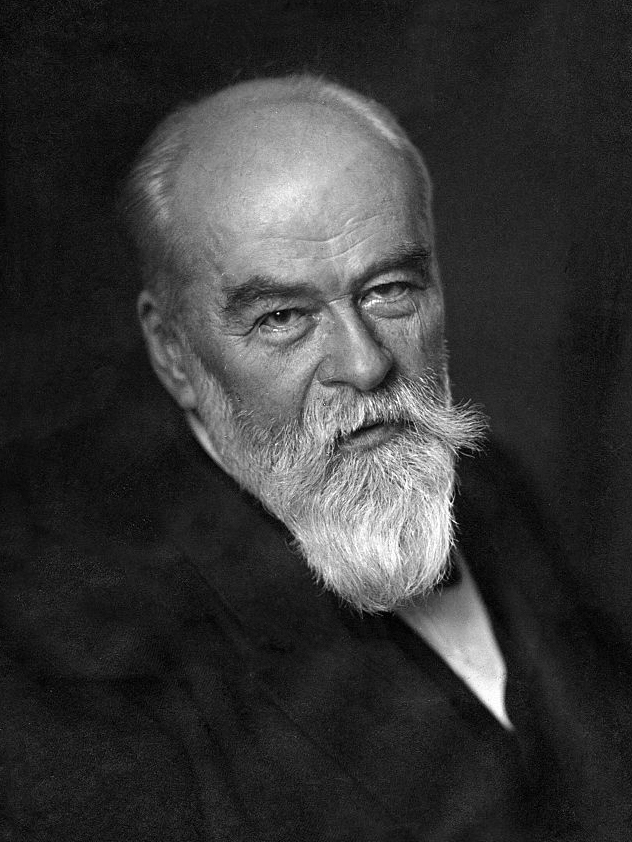
To the left: Gustav von Schmoller, ca. 1908, available at Wikipedia.
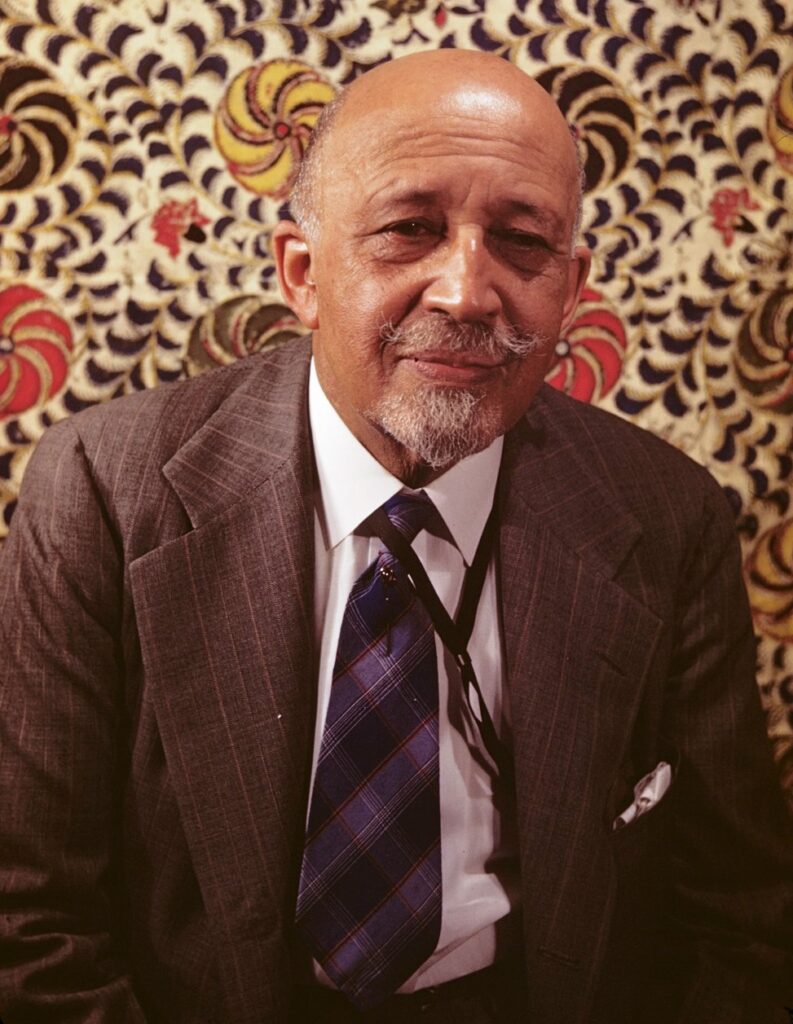
To the right: W.E.B. Du Bois, 1946, available at Yale Library.
But this is not the only way to arrive at Global Sociology from Alt-Treptow. Walking the eight hundred meters from Marian’s home to mine in Karl-Kunger-Straße, you can choose among several streets named after nineteenth- and twentieth-century German political economists (Nationalökonomen) such as Wilhelm Lexis, Carl Menger, August Oncken, and Gustav von Schmoller. You will most likely pass Schmollerstraße and Schmollerplatz before entering Karl-Kunger-Straße. Gustav von Schmoller (1838–1917) is arguably the most influential of these economists, and thus he lends his name to both a street and a square. Schmollerplatz is a leafy square, featuring Gründerzeit buildings from the early 20th century, Plattenbau blocks from the GDR and new developments for the affluent.
As an economist, Schmoller was interested not only in the market but also in the “social question,” and although he was not considered “left-wing” at all, he – like several other economists – was given the ironic nickname of Kathedersozialist (variously translated as socialist of the chair, academic socialist or armchair sociologist). By working towards social justice between different classes he wanted to prevent an upcoming socialist revolution. Schmoller became known in sociological circles as a counterpart to Max Weber. In the Verein für Socialpolitik (Association for Social Policy), founded in 1872 in Eisenach – which by coincidence is Marian’s hometown – Schmoller played a central role. He embodied the opposing position to Weber, who in his essay on “The “Objectivity” of Knowledge in Social Science and Social Policy” (published in German in 1904) had demanded that – while not assuming their complete neutrality – scholars should withhold their “value judgments” (Werturteile), their own political orientations, and their convictions over the course of the empirical research process. Schmoller, on the other hand, identified the “common good” as an “objective value judgment.”
Schmoller’s broadly positive attitude toward the German colonial project was fully in line with these positions. He argued that colonialism was essential for Germany’s emergence as a political and economic great power. At the same time, he adopted a comparatively liberal or moderate stance toward colonized populations, whom he believed could be “civilized.” For instance, he advocated “native farming” and “native small businesses” instead of plantation-based economies, seeing these as tools for educating the “natives,” integrating them – at least potentially – into a capitalist world economy, and improving their conditions. In Berlin, he was also among the later founders of the Kolonialpolitisches Aktionskomité (Colonial-Political Action Committee) in 1906 (Grimmer-Solem, 2007). As a respected and widely known public intellectual, he thus helped mobilize broad German public support for the colonial project.
How this thinking affected one of his earlier students is unclear: W.E.B. Du Bois (1868–1963) had enthusiastically attended Schmoller’s lectures at the Friedrich Wilhelm University in Berlin (today’s Humboldt University, which later awarded him an honorary doctorate in 1958). Du Bois lived in Germany from 1892–1894, first in Eisenach and then in Berlin Kreuzberg, at that time a working-class district adjacent to Treptow, in the apartment of a German family roughly three and a half kilometers away.
From today’s vantage point, it is difficult to comprehend that Du Bois found life as a Black man in Berlin considerably more pleasant than in the United States, where, especially in the South, social contact was prohibited. In Berlin, and Germany, as he enthusiastically comments in his autobiography, he experienced greater integration into social contexts, and, above all, perceived that class differences were emphasized more strongly than “racial differences,” and that he was seen as an aspiring student:
So too in brave old Eisenach […] I spent a happy holiday in a home where university training and German home-making left no room for American color prejudice. From this unhampered social intermingling with Europeans of education and manners, I emerged from the extremes of my racial provincialism. I became more human; learned the place in life of “Wine, Women, and Song”; I ceased to hate or suspect people simply because they belonged to one race or color; and above all I began to understand the real meaning of scientific research and the dim outline of methods employing its technique and its results in the new social sciences for the settlement of the Negro problems in America (Du Bois, 1968, p. 160).
At the university in Berlin, Du Bois mainly attended lectures by economists – besides Schmoller also those of Heinrich von Treitschke, a well-known antisemite and nationalist. Du Bois was fascinated by their scholarly work and, in general, also by “militaristic patriotism” in Germany and – as Cahn (2025) argues – seems to have ignored Treitschke’s antisemitism just as he overlooked broader misanthropic tendencies in Germany. Academically, Du Bois was impressed by the then-hegemonic historical approach in German political economy, because it enabled him to understand the situation of Black Americans using historical methods and in a globally comparative manner.
He was likewise impressed by the engagement of Schmoller and the Kathedersozialisten with the social question: although conservative in many respects, they expressed clear positions on the challenges of social inequality in Germany, including taking part in the debates in the public sphere. Du Bois became a member of the aforementioned Verein für Socialpolitik, which, according to Cahn (2025), would later inspire his activist commitments.
While Schmollerstraße and Schmollerplatz were named after the economist in 1930 and are well known in Alt-Treptow where many streets bear the names of “great” political economists, Du Bois was only honored in 2019 with a commemorative plaque on the wall of the Kreuzberg house he lived in.
How does it matter today? …and for us
Working through the neighborhood described here on the basis of historical processes as well as historical names and references of course triggers the question: What is this good for, is it in any way relevant for Global Sociology besides being an entertaining exercise?
That is a question that is difficult to answer without in-depth empirical investigation, something that is, of course, not possible within the scope of this short text. The historical density of urban space always allows for a multiplicity of historically specific interpretations, only a few of which are ever discussed discursively, become relevant in people’s socialization, and solidify as interpretive patterns. This is also subject to historical change (Massey, 1995). Moreover, it is always a question of what is perceived latently and what is “known” as explicit knowledge.
As someone interested in history, I was not aware of Bouché’s story, nor do I think much about Schmoller when I pronounce the name of the square, even though I know who he was. The small explanatory plaques attached to the street signs do not change this. What is most present to me is the former division of Bouchéstraße into “East” and “West,” and the effects of this on the social fabric of the neighborhood up to the present day. I write this from the position of the “finite province of meaning” in the everyday world (following Schütz, 1962), i.e. as someone who lives there but has not studied this neighborhood academically.
What drew us to Alt-Treptow? This is best explained by the district’s existence on the dividing line between the western and eastern global spheres of influence until 1990, and the resulting tucked-in position of the neighborhood, bordered on three sides by “the West.” To this day, this tends to evoke associations of a village-like, family-friendly character compared with the surrounding neighborhoods. The other aspects mentioned in this text were more peripheral at the time – and yet they are important when one adopts a more scholarly approach to one’s own positioning within urban space.
References
Du Bois, W. E. B. (2007). The autobiography of W.E.B. Du Bois: A soliloquy on viewing my life from the last decade of its first century (H. L. Gates, Ed.). Oxford University Press. (Original work published 1968)
Massey, D. (1994a). A global sense of place. In Space, place and gender (pp. 146–156). Polity Press.
Massey, D. (1994b). Space, place and gender. Polity Press.
Weber, M. (1904). Die ‘Objektivität’ sozialwissenschaftlicher und sozialpolitischer Erkenntnis. Archiv Für Sozialwissenschaft Und Sozialpolitik, 19(1), 22–87.
On post-truth, conspiracy theories, and the majority world
By Joschka Philipps, University of Bayreuth
“Post-truth,” defined as “relating to circumstances in which objective facts are less influential in shaping public opinion than appeals to emotion and personal belief” (Flood, 2016), has attracted substantial attention, and lament, in public discourse and within the discipline of sociology (Aradau & Huysmans, 2019; Ball, 2017; Drążkiewicz & Harambam, 2024; Fuller, 2018; Hess, 2020). Twelve years before the term gained notoriety as the 2016 Oxford Dictionary’s Word of the Year, the late Bruno Latour argued in 2004 that the weapons of critical theory had fallen into the hands of ludicrous conspiracy theorists. “What has become of critique,” Latour (2004, p. 228) asked, “when my neighbor in the little Bourbonnais village where I live looks down on me as someone hopelessly naïve because I believe that the United States had been attacked by terrorists [on 9/11]?” And then:
Let me be mean for a second. What’s the real difference between conspiracists and a popularized […] version of social critique inspired by a too quick reading of, let’s say, a sociologist as eminent as Pierre Bourdieu […]? In both cases, you have to learn to become suspicious of everything people say because of course we all know that they live in the thralls of a complete illusio of their real motives. Then, after disbelief has struck and an explanation is requested for what is really going on, in both cases again it is the same appeal to powerful agents hidden in the dark acting always consistently, continuously, relentlessly. Of course, we in the academy like to use more elevated causes—society, discourse, knowledge-slash-power, fields of forces, empires, capitalism—while conspiracists like to portray a miserable bunch of greedy people with dark intents, but I find something troublingly similar in the structure of the explanation, in the first movement of disbelief and, then, in the wheeling of causal explanations coming out of the deep dark below. What if explanations resorting automatically to power, society, discourse had outlived their usefulness and deteriorated to the point of now feeding the most gullible sort of critique? (p. 228).
Faced with existential concerns like climate change, Latour was hard-pressed to assure readers that his earlier work on the denaturalization of scientific facts (e.g., Latour, 1987) “was never to get away from facts but closer to them, not fighting empiricism but, on the contrary, renewing empiricism” (2004, p. 231). The point, he argued, was that matters of fact “are not all that is given in experience” and “only very partial”; a more suitable focus in the social sciences should be on more holistic matters of concern, which aim to construct, protect and to care rather than to debunk (2004, p. 232).
Steve Fuller trenchantly critiques such “fancy metaphysical diversions” as deflecting attention “from the naked power dynamics” that inhere in knowledge production and have long stood in the way of “greater epistemic democracy” (Fuller, 2018, pp. 61-62). Academics and intellectuals, instead of trying to reclaim their destabilized epistemic authority by morally defaming post-truth and conspiracy theorists, should see the contemporary post-truth condition as marking “a triumph of democracy over elitism, albeit one that potentially tilts the balance towards ‘chaos’ over ‘order’” (Fuller, 2018, p. 181).

Pyramide. Photo: Courtesy of Aurélien Gillier.
Whatever side one takes in these “Science Wars,” Fuller’s (2018) point “that the post-truth condition is here to stay” (p. 181) is hard to refute. It brings to the fore what sociologists have previously conceptualized as the “contingency” (Wagner-Pacifici, 2000) or as the “radical uncertainty” (Boltanski, 2011, p. 37) that underlies society and that now is turning into a very concrete lifeworld experience. This constitutes something radically new in places where the nation-state has long fulfilled the task of “organizing and unifying reality, or, as sociology puts it today, of constructing reality, for a given population on a given territory” (Boltanski, 2014, p. x). In the majority world, however, (or the “global south” or “postcolonial contexts,” however you want to call it), the post-truth condition has long been present. As Ahmed Veriava (2025) has put it succinctly, “For the colonized, reality has always been post-truth,” both in terms of a skeptical distance to the academy—usually deemed in cahoots with power—and in terms of an exceedingly pluralistic epistemic lifeworld, in which no single institution can legitimately claim authority over the Truth. An analogy between the city of Conakry and the Internet might help undergird my point. Whether one immerses oneself in the capital of the Republic of Guinea or in the boundless heterogeneity of information circulating online, one might easily experience “a lack of gravity that would hold meanings to specific expressions and actions. There are no bearings and disorientation is guaranteed. Yet the crisis is dissipated: there is no normality to refer to” (Simone, 2008, p. 30).
The question of normality brings us back to the conspiracy theories that concerned Latour, and which, in the moral panic over an alleged post-truth era, have become a central boogey man (Aradau & Huysmans, 2019; Drążkiewicz & Harambam, 2024). Conspiracy theories strike a chord with earlier, and arguably foundational questions around ideology and false consciousness in Marxism, various strands of critical theory and in the sociology of knowledge (Collins, 1998, p. 1034). As such, they are not only the pathologized “other,” against which scientific disciplines acclaim their methodological rigor and scientificity (cf. Douglas et al., 2019; Hofstadter, 1964; Popper, 1962); they also constitute an alter ego, a style of thought in which “we recognize something of ourselves” (Carey, 2017, p. 94; see also Boltanski, 2011, 2014; Dentith, 2019; Orr & Husting, 2019; Parker, 2000). This intriguing tension may explain the ever-growing popularity of conspiracy theories as a research topic—as evidenced by the 112 page-long bibliography of the COMPACT research project (“Comparative analysis of conspiracy theories in Europe”) and the increase in academic interest in conspiracy theories—in just 1 year, from 2020 to 2021, psychological studies on conspiracy beliefs have multiplied by 150%, according to Bowes et al. (2023, p. 2).
In the global north, conspiracy theories are usually interpreted as a form of heterodoxy (Anton et al., 2014), i.e., as antithetical to the “normal” doxa of mainstream opinion. One influential definition of a conspiracy theory sees it as an “accusatory perception which may or may not be true, and usually conflicts with the appropriate authorities” while “conspiracy refers to events that our appropriate institutions have determined to be true” (Uscinski, 2019, p. 48; emphasis in the original). The concern here is not about the factuality of whether a conspiracy has happened; it is about whether the epistemic authorities say that it has happened. Such an interpretation presumes the existence of such authorities, and their sufficient authority and legitimacy to institutionalize a clear dividing line between ortho-or heterodoxy. But this line is increasingly difficult to draw, anywhere in the world, given the “multiplication of coexisting interpretations of reality” (Schnettler, 2018, p. 231, with reference to Peter Berger). Moreover, it has not been the norm in many postcolonial contexts of the majority world, which instead have been accustomed to a far greater indeterminacy of reality (Cooper & Pratten, 2015; Mbembe, 2001; Newell, 2012). In such contexts, there can be no “conspiracy theory” in the Western sense of the term (Philipps & Gillier, 2024). Indeed, when Oumarou Boukari was doing research on Covid-19 conspiracy theories in neighboring Côte d’Ivoire, only very few of his research participants would understand what he meant by “conspiracy theory.” To explain, he ended up translating the term by asking “whether people thought the coronavirus was politics” (Boukari & Philipps, 2023, p. 115, my emphasis). As a synonym for politics, conspiracy theories in the majority world are neither heterodox nor stigmatized, but simply one way amongst others of highlighting the Machiavellian nature of power and domination.
The Don Killuminati
Indeed, if there is one political theorist whose name popped up regularly in my conversations with urban youth in Conakry, it’s Machiavelli. Or perhaps it’s Makavelli, the US rapper Tupac Shakur’s artist’s name on his posthumous album “The Don Killuminati: The 7 Day Theory” (1996). In Conakry, Tupac remains a central icon to this day; his likeness adorns bars, hair salons, minibuses, and T-shirts like in no other Francophone capital in West Africa. The son of Black Panthers activist Afeni Shakur, Tupac spoke out with a vengeance against the oppression and manipulation of black minorities in the US, including by the corrupt music industry (Stanford, 2011). He took his alias after having read Machiavelli’s The Prince in prison in 1994, while making clear that “My name is not Machiavelli, my name is Makaveli. I took it, that’s mine. […] And I don’t feel no guilt. All these motherfuckers stole from us forever, I’m taking back what’s mine.“ Tupac’s indictment of “the system” still resonates with Conakry’s self-proclaimed ghetto youth (Philipps, 2013) in different ways. And although he was critical of the idea of an Illuminati global conspiracy—“I’m putting the K [be]cause I’m killing that Illuminati shit”—the album title “The Don Killuminati” contributed to the Illuminati’s popularity in the global rap scene, and also in Conakry.

Toopaque. Photo: Courtesy of Aurélien Gillier.
The actual secret society of the Illuminati was founded in 1776 by Adam Weishaupt in Ingolstadt, apprehended in 1784 and then ceased to exist as an organization. However, it became famous as the alleged mastermind behind the French Revolution and as usurpers of the social and political order in the United States (Gregory, 2009; McKenzie-McHarg, 2014; Robison, 1798). Akin to the New World Order, the Jewish world conspiracy, and other ideas of all-encompassing domination, the Illuminati are thought to control and steer the major events of our time, while at the same time maintaining a facade of normality.
In Conakry, the Illuminati are generally described as a secret satanic sect of omnipotent and transnationally connected individuals. Their specific identity, their relationship to other groups such as the Freemasons, their involvement in day-to-day politics, and the question of who actually belongs to the Illuminati are controversial.[1]
Before the advent of the Internet, DVDs from neighboring Sierra Leone provided evidence that Bill Gates, Rihanna, Jay-Z, and Beyoncé were Illuminati; at the time, the president and several ministers were suspected of being national Illuminati. One interior minister apparently refused to say explicitly whether he was an Illuminati or not, playing on the mixture of mistrust and awe that surrounds this idea. At the regional level, Malian singer and kora player Sidiki Diabaté, son of kora legend Toumani Diabaté, was regularly questioned about his missing finger, as members were allegedly only accepted into the secret congregation through a kind of sacrifice, often in the form of a body part. Similar suspicions were directed at singer Maître Gims and the late DJ Arafat. However, the specific reasons behind these suspicions often remain vague. In some cases, reference is made to satanic symbols in music videos or combinations of numbers, but, at least in Conakry, there are hardly any concrete events that could be used to prove the Illuminati conspiracy.
Given how deeply Guinea’s history is marked by actual conspiracies, these pop-cultural narratives surrounding celebrities can appear disturbing. Guinea was the only French colony that voted NO in a 1958 referendum to break away from colonial rule instead of becoming part of the West African Communauté Française. Under President Sékou Touré, it became the target of French subversion, starting with the Opération Persil in January 1959 and France’s attempts to destabilize Guinea’s economy by introducing counterfeit banknotes to cause hyperinflation (Bat, 2008; Faligot & Krop, 1985; Goerg & Pauthier, forthcoming; Pierret & Correau, 2018). In November 1970, Portuguese troops marched into Conakry to capture Guinea-Bissau’s anti-colonial leader Amilcar Cabral and overthrow Sékou Touré as part of Operation Mar Verde (Marinho, 2021). Although none of these conspiracies were successful—Touré died of natural causes in 1984—they had a profound effect. The regime was permeated by the idea of a “Complot Permanent” (Lewin, 2009, p. 17), a constant neocolonial, imperialist conspiracy, a danger that also emanated from supposed accomplices and enemies within. Conspiracy theories thus became part of the regime’s institutionalized repertoire for suppressing, intimidating, imprisoning, torturing, and executing real and imagined opposition forces.
Compared to the former imperialist enemy, and contrary to the Manichean worldview that conspiracy theories are said to represent, the Illuminati in Conakry cannot be easily pinpointed and elude clear distinctions. They are not tied to specific locations. Although their power center is still believed to be in the global North, it is increasingly assumed that many Asians are now involved. The term is also remarkably vague in terms of identity characteristics such as gender, ethnicity, or nationality. Potentially, anyone can be an Illuminati, even among the stars that people admire. The enormous range of connotations associated with the Illuminati—evil, fame, money, power, secrecy, sacrifice, transnationalism—opens up a variety of attitudes toward them, from criticism to envy to admiration.
In fact, the aspiration to be part of the Illuminati is being increasingly exploited via the anonymity of social media in a thriving market of deception (see Newell, 2021). A friend of mine, let’s call him Abdoulaye, a rapper with a low-paying job as a substitute teacher, had been contacted via WhatsApp by a foreign profile claiming to be the Maître of an Illuminati lodge in Washington, D.C. The man assured Abdoulaye that he was chosen to be among the richest and most famous people in the world if he joined the Illuminati and followed all the rules with absolute discretion. This ultimately included sending his passport to a foreign address. Abdoulaye refused and broke off contact after two months, but he remained convinced that he had spoken to the real Illuminati and doubted for a long time afterwards whether he should have taken the leap of faith. Another friend told him: “If they [the Illuminati] can give you everything you want for ten years, I’d be willing to sell my soul. Then I can build my mother a villa and everything will be fine, then I can die.”
If we follow Achille Mbembe and Julie Archambault in their assessment, the ambivalence of the Illuminati is all but unique; it is “at the heart of contemporary processes of identity formation in the [African] continent” (Mbembe, 2002, p. 639) and characteristic of “regimes of truth that […] encourage ambiguation over clarification” (Archambault, 2017, p. 15). In such a regime, the Illuminati are not a clearly defined ontological object but a reference point for scepticism: What order is at work here? Who is part of this order? Is it open to me? The lack of clear answers reveals the “inherent fragility” of reality, as Boltanski (2011, p. 36) puts it—but without necessarily leading to existential fears of lack of control (cf. Bauman, 1997, p. xviii). Instead, a playful and ironic relationship with possible truths in the plural often prevails—Saïkou Oumar Sagnane speaks here of an ironic attitude of insouciance that Guineans muster to cope with the hardships of everyday life.[2]
Achille Mbembe (2002, p. 639) attributes it to the “heretical spirit” that lies at the heart of the encounter between Africa and the world, be it in relation to Islamic, Christian, and colonial regimes and knowledge orders.
Each time, reality is erased, recreated, and duplicated. It is this power of proliferation (and its ability to obliterate the notions of truth and falsehood, of the real and the unreal, of the visible and the occult) that characterizes contemporary African experience, which is at least original, if not unique. These characteristics are threefold: an absence of sharp ruptures, a nonlinearity, and everywhere the swirling chain of fragmented events in which everything else is engulfed (Mbembe, 2002, p. 640).
In the case of the Illuminati, the conspiracy theory of the “Illuminati” is turned into a metaphor for a Machiavellian system of money and power that is dramatized on the one hand, but on the other hand is also broken down and opened up, rendered accessible, and thus turned into its opposite. One may wonder whether the “African experience” is in fact so unique after all. The swirling chain of fragmented events seems to be at least one of the dynamics that the world is confronted with in the current post-truth condition. As Boltanski (2014, p. 202) writes about conspiracy theories as reconfigurations of reality: „Such reconfigurations may gradually come to affect the very tenor of reality as a whole, a reality that, paradoxically, tends to dissolve in the multiplicity of probing operations intended to make it hold together.“
,
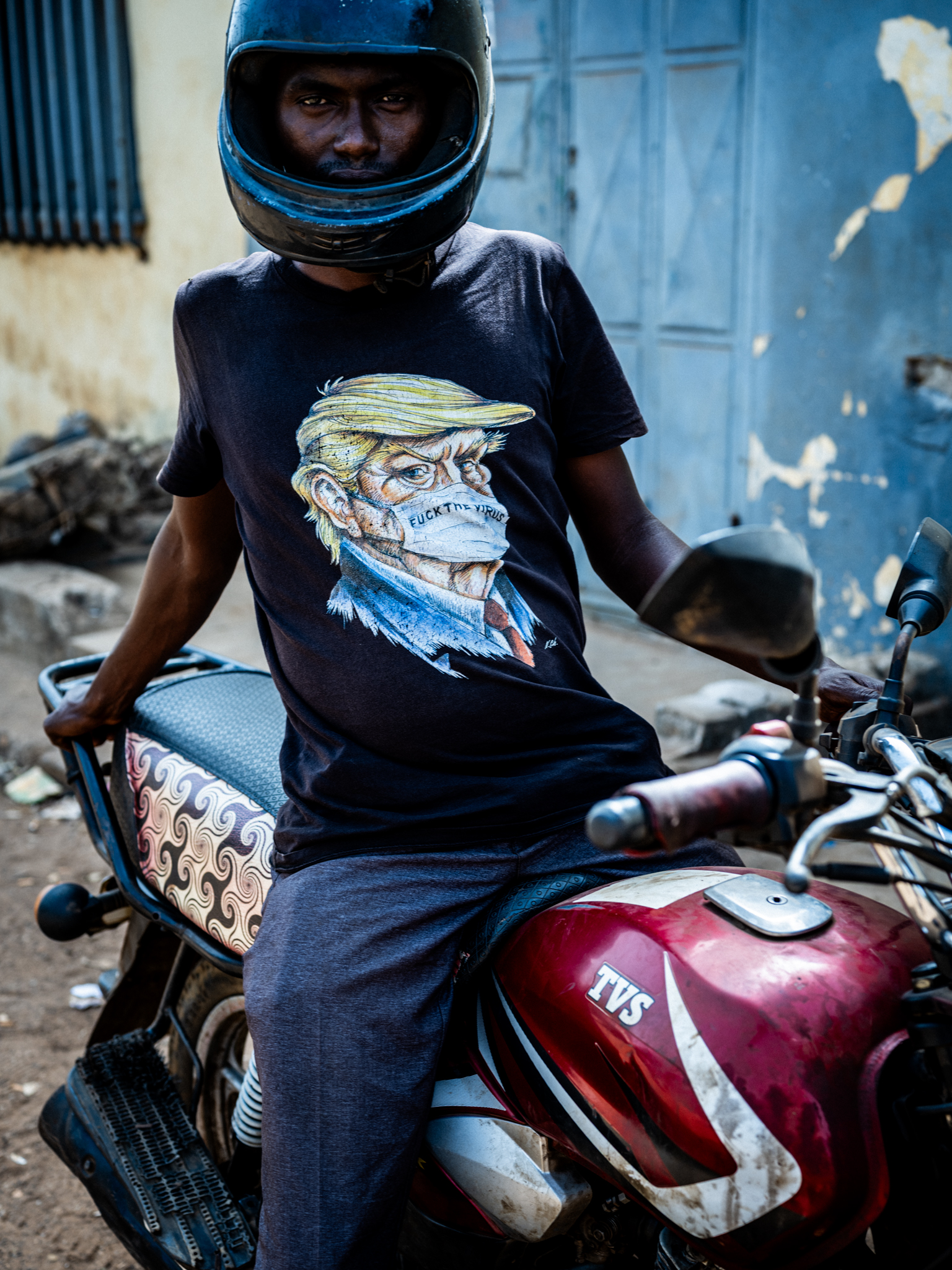
Fuck the Virus. Photo: Courtesy of Aurélien Gillier.
Stranger than fiction
As conspiracy theories and post-truth politics have emerged as “energizing points of attention and contention” (Collins, 1998, p. 876), they are increasingly used as a global frame of reference to analyse contemporary problems at the nexus between power and knowledge. Bespeaking the modern nation-state’s concern over informational hegemony (Alatas, 2022; Boltanski, 2014; Gramsci, 1988; Srivastava, 2012), the perspectives associated with these terms are now entering places where they have hitherto been hardly existant. In Guinea, for instance, NGOs and international organizations have increasingly campaigned against disinformation and rumors, against online hate speech and fake news. Whether these campaigns are helpful needs to be assessed on a case-to-case basis. What they certainly miss out on, however, is that reality is often so absurdly unjust and inequal, that some people rely on some metaphorical satanic sect to make sense of it.
Guinea, and perhaps I should have pointed this out before, is the world’s largest supplier of bauxite, the main ingredient of aluminium; it is also home to the world’s largest undeveloped, high-grade iron ore deposit, the Simandou mine (Campbell & Clapp, 1995; Knierzinger, 2018). At the same time, Guinea is one of the poorest countries in the world, and thus home to a what Guineans like to call a geological scandal that persists despite uncountable strikes and protests against both the mining companies and the state that protects them (Philipps, 2017; Sarró, 2023). In the “corruption deal of the century” surrounding the Simandou mine (Keefe, 2013; Kochan, 2013), the now-convicted Nicolas Sarkozy represented the currently indicted Israeli investor Beny Steinmetz. The annual profits of mining companies such as Rusal or Rio Tinto are in some cases ten times higher than Guinea’s budget; individual shareholders in these companies have private assets amounting to the annual income of all Guineans combined; singular investors, and even individual persons, can make decisions about the “fate of millions by telling their companies to stop the machines, without breaking any laws” (Knierzinger, 2014, p. 26). The absence of any organized high-level debate about these realities is arguably more problematic than the falsehoods that circulate.
What can global sociology do in such a context? For one, it can help contextualize and “provincialize” the post-truth problem. It can shape a more humble sociological stance by alerting us to the fact that “Northern theory” and its claims to universality (Connell, 2006) often stand in the way of a more lateral approach to universality (Diagne, 2023). It can be drawn upon to translate what concepts such as “conspiracy theories” mean in different spaces and places of the world, and to study how to re-conceptualize the phenomenon of believing in malevolent secret powers as the cause behind harmful events. Concepts, as Macamo (2022) reminds us, ultimately “hide more than they reveal,” and working at the interstices of what allows and evades conceptual capture (Simone, 2022) is necessary to do empirical qualitative research in a context where, as Kovats-Bernard put it, “the ‘stability in the ethnographic field’ once guaranteed by colonial power no longer holds” (cited in Andersson, 2016, p. 708). Such reservations, finally, do not mean that we need to dissociate ourselves from debates about post-truth and conspiracy theories. As ‘the West’ has ceased to be the world’s center of gravity (Comaroff & Comaroff, 2012; Connell, 2006, 2007; Mbembe, 2013, p. 1), the destabilization of hitherto dominant knowledge systems is very much part of what “post-truth” is about.
[1] The following notes are based on interviews and conversations in Conakry and over the phone since 2017, especially with Ams Keuche, Nana Barry and Fiston. Some of it stems from my previous work on Conakry’s urban youth (Philipps, 2013).
[2] Conversation with Saïkou Oumar Sagnane, Conakry, March 2022. See also Sagnane (2024).
Cite this article as: Philipps, J. (2026, February 5). Illuminati in Conakry: On post-truth, conspiracy theories, and the majority world. Global Qualitative Sociology Network. https://global-qualitative-sociology.net/2026/02/05/illuminati-in-conakry/
References
Bat, J.-P. (2008). Le syndrome Foccart: La politique française en Afrique, de 1959 à nos jours. Editions Gallimard.
Bauman, Z. (1997). Postmodernity and its discontents. Polity Press.
Boltanski, L. (2011). On critique: A sociology of emancipation. Polity Press.
Boltanski, L. (2014). Mysteries and conspiracies: Detective stories, spy novels and the making of modern societies. Polity Press.
Campbell, B., & Clapp, J. (1995). Guinea’s economic performance under structural adjustment: Importance of mining and agriculture. The Journal of Modern African Studies, 33(3), 425–449.
Cooper, E., & Pratten, D. (Eds). (2015). Ethnographies of uncertainty in Africa. Palgrave Macmillan.
Faligot, R., & Krop, P. (1985). La Piscine: Les services secrets français, 1944-1984. Editions du Seuil.
Goerg, O., & Pauthier, C. (2025). Aux origines de l’obsession complotiste en Guinée, années 1940–1961. In J. Philipps & A. Gillier (Eds), Politics of the unknown. Images of power and the power of images. iwalewabooks.
Gramsci, A. (1988). Gramsci’s prison letters: A selection. Swan.
Gregory, S. (2009). Wissen und Geheimnis: Das Experiment des Illuminatenordens. Stroemfeld.
Latour, B. (1987). Science in action: How to follow scientists and engineers through society. Harvard University Press.
Lewin, A. (2009). Ahmed Sékou Touré: (1922–1984): Président de la Guinée de 1958 à 1984. L’Harmattan.
Macamo, E. (2022, May 21). In search of an object: Producing knowledge on the global south. Doing global sociology: Methodology and theory after the postcolonial critique, University of Göttingen.
Marinho, A. L. (2021). Operação mar verde: Um documento para a história. Temas e Debates.
Mbembe, A. (2002). On the power of the false. Public Culture, 14(3), 629–641.
McKenzie-McHarg, A. (2014). The transfer of anti-Illuminati conspiracy theories to the United States in the late eighteenth century. In M. Butter & M. Reinkowski (Eds.), Conspiracy theories in the United States and the Middle East (pp. 231–250). De Gruyter.
Philipps, J. (2013). Ambivalent rage: Youth gangs and political protests in Conakry, Guinea. Éditions L’Harmattan.
Philipps, J., & Gillier, A. (2024). Modalities of theorizing. An interdisciplinary reflection on conspiracy theories. University of Bayreuth African Studies Online Series (BASOS).
Popper, K. R. (1962). Introduction: On the sources of knowledge and of ignorance. In Conjectures and refutations: The growth of scientific knowledge (pp. 3–32). Basic Books.
Robison, J. (1798). Proofs of a conspiracy against all the religions and governments of Europe, carried on in the secret meetings of Free Masons, Illuminati, and reading societies (4th ed.).
Veriava, A. (2025, July 8). Frank-Talking: Biko, Foucault, and the possibilities of telling the truth in a post truth world. 5th ISA Forum of Sociology, Rabat, Morocco.

By Arne Worm, Georg August University of Göttingen
In this contribution, I reflect on the experiences and challenges of incorporating the central themes of this network into academic teaching—particularly the intersections between qualitative research on the one hand, and global and postcolonial sociologies on the other. While debates about the agenda and methodologies of Global Sociology are far from settled, it seems fair to identify reflexivity regarding the orders, legacies, and practices of knowledge production as one of its core concerns. This reflexivity extends well beyond research practices in the narrow sense of data collection and analysis. It encompasses a wide range of issues, such as rethinking the so-called “Western” canon of social theories and methodologies, or confronting language hierarchies—just to name two examples that resonate strongly with teaching.
I will begin with an (auto)sociological exercise in self-reflexivity about teaching within an academic field that may eventually become institutionalized as global qualitative research. I then share reflections and observations from a course titled Qualitative Research in the Context of Global Sociologies, which I taught during the 2022–2023 winter semester at the University of Göttingen. I hope these reflections will be useful to colleagues teaching within the German academic system as well as elsewhere—or to readers interested in the peculiarities (or provincialities) of a “venerable” German university in a mid-sized provincial city.
I must begin by asking for your indulgence regarding the somewhat cheesy—or even slightly sentimental—wordplay in the title. Readers familiar with debates on global sociologies will no doubt recognize the reference to Michael Burawoy’s (1947–2025) introductory chapter, “Reaching for the Global,” in the volume Global Ethnography (Burawoy, 2000). The British sociologist based in California, who passed away unexpectedly last year, played an important role in shaping discussions about practicing sociology as a global discipline, particularly within the International Sociological Association. He was also among the few scholars to make early and concrete contributions to the methodological realization of this agenda. Unsurprisingly, his work was included in our seminar readings.
If I’m honest, Burawoy’s intellectual accomplishments aren’t the only reason I thought it clever to begin with a playful nod to his work. Another—and probably more relevant—reason is biographical, and sociological. Born in the early 1980s and raised in a monolingual German family in a small provincial town in northern Germany, the “cultural capital” (to borrow Bourdieu’s term) that shaped my early socialization had little to do with cosmopolitan orientations or versatile academic discourses. It had, however, a great deal to do with U.S. pop culture. My parents belonged to the professional lower-middle class but had not attended university. Looking back, the impression Burawoy made on me when I saw his presidential address opening the ISA World Congress in Yokohama in 2014 (isasociotube, 2015)—during the early phase of my doctoral studies and at my first international conference—clearly reflects the symbolic and linguistic orders that structure academia. To be fair, I could have opened with memories of a similarly brilliant talk by Gurminder K. Bhambra on European Colonial Entanglements in Göttingen (Bhambra, 2019), but I couldn’t find a fitting wordplay (though we discussed her work in the seminar). Either way, when writing about global sociology and qualitative research, I would have begun with a reference to English-speaking academia.
German, U.S.-American, and British sociology have long been historically entangled, especially in the field of qualitative social research. During my own M.A. studies in Göttingen, I took it for granted that the literature we read was written by US-American, British, and German sociologists. Many of them—such as Adorno, Arendt, Elias, Mannheim, and Schütz—had fled from National Socialism in Germany to English-speaking countries. Only later in my career did I realize that the canonical—and critical—sociologists who had expanded my intellectual horizons during my time in Göttingen actually represented a rather narrow slice of what sociology could—and should—be. After the effort it took to grasp the Anglo-German qualitative research “canon”—which, in fact, was only a very specific and, in a sense, even marginalized canon within Western sociological “grand theories”—I began to learn more about the institutional inequalities and colonial legacies that continue to shape our (academic) world today. It is worth noting that colonialism in general—and Germany’s (post)colonial history in particular—have long been marginalized topics in the German educational system, in cultural institutions, and in public memory.

Auditorium Goettingen, 2020. Copyright: Klein und Neumann, CC-BY-SA 3.0.
This also applies to the local context of Göttingen and its university, where I have been researching and teaching for several years now. The University of Göttingen (“Georg-August-Universität”) is one of the oldest German universities, with a long history of Nobel Prize winners and an international reputation. As history tells it, the university was founded in 1732/1734 by the British King George II—although locally he is mostly remembered as the Elector (“Kurfürst”) of Hanover. In my view, few students—and probably few staff members—are aware of the imperial context and the entanglements with the British crown in the university’s history. I myself learned about this thanks to my colleague and network member Eva Bahl, who explored this connection as part of a research project on Individual and Collective Memories of Slavery and the Slave Trade. Today, the university is internationally well connected and makes great efforts to attract students and scholars from around the world. Nevertheless, Göttingen remains a mid-sized, historically Protestant provincial city in Lower Saxony. As in most German universities, the majority of students come from the immediate region, and BIPOC students are typically underrepresented in classrooms. Within the social sciences, concrete research on Global South societies—beyond ethnology or anthropology—remains scarce. In the methodology and methods courses I teach, M.A. students come from various social science disciplines, including sociology, political science, diversity studies, gender studies, and sports studies.
Let us now turn to the seminar “Qualitative Research in the Context of Global Sociologies,” which I taught during the 2022–2023 winter semester. Addressing the complexity of topics surrounding global qualitative social research—combined with the diversity of the student group—gave me quite a headache. In light of this diversity and complexity, I decided to approach discussions on global sociology and postcolonial perspectives from various “standpoints” within the German-speaking sociological field. This approach required largely dispensing with primary literature, but it allowed for a more systematic examination of the structures and discourses within the German-speaking academic landscape in which my students and I were primarily embedded. In the syllabus, I announced that students would engage with the methodological, epistemological, and social-theoretical foundations of qualitative research on the one hand, and reflect on—or (counter-)read—them in light of current discussions on global sociologies and de- and postcolonial approaches on the other. We asked questions such as: What challenges arise for qualitative social research in the context of complex transregional and global interdependencies and power inequalities? And what contributions have qualitative methodologies made to developing a globally informed and reflexive sociology (for example, through case studies or multi-sited research)? For the 20–25 students enrolled, the topic proved engaging enough to sustain thirteen highly interactive, discussion-based sessions (each lasting 120 minutes) that covered a wide range of readings.

Students’ groupwork on the Interpretive Paradigm: Social action (soziales Handeln) produces the social world (soziale Welt), which is at the same time dependent on and structuring the social order (soziale Ordnung). Photo: Arne Worm, 2022.
We began with an introduction to the so-called Interpretive Paradigm (Keller 2012; Rosenthal 2015), which emphasizes the need to delve into the depths and contradictions of everyday lived realities when developing social theories. The following session adopted a postcolonial perspective (Reuter & Villa, 2010; Castro Varela & Dhawan, 2020) in order to establish a basic understanding of what the term implies and what directions postcolonial theories urge us to consider when conducting research. Next, we examined the concerns and perspectives of global sociology by reading Burawoy’s introduction to Global Ethnography as an entry point into methodological principles. This resonated strongly with a text on the relationship between theory and empirical research in qualitative sociology (Kalthoff, 2008).
Under the heading “Turning South,” we then discussed Julian Go’s “Perspectival Realism and the Southern Standpoint” (2016). Go’s argument that “social positions matter” and are not in contradiction to objectivity struck a chord with many students and seemed to offer pathways out of their unease with the androcentric and Eurocentric traditions that continue to dominate the social sciences. Some students raised complex epistemological and ethical questions—such as “Do we still have any concept of truth?” or “What about universal human rights?” Interestingly, these “big questions” were less important to most participants than the practical challenge of transforming knowledge production and research practice. A (critical) pragmatic approach in the face of structural inequalities appeared more promising than waiting for philosophical absolution. Elísio Macamo’s essay “Before We Start: Science and Power in the Constitution of Africa” (2016) led to reflections on how knowledge systems shape the construction of epistemological and geographical territories—even before we begin doing research.
We then dedicated two sessions to a debate published in the journal Soziologie by the German Sociological Association (DGS). Between 2018 and 2020, various authors discussed the aims and implications of a postcolonial sociology, beginning with an email exchange on “Postcolonialism and Sociology” between Manuela Boatcă, Sina Farzin, and Julian Go (2018). A sharp response by Markus Holzinger (2019) questioned “what is new about the ‘new postcolonialism,’” given that research on colonialism has existed for quite some time. Subsequently, Meinhof (2020) reiterated that “(p)ostcolonial sociology is not a sociology of colonialism, but a programmatic project to explore a new type of sociology—one that includes non-Western social theory and theorizes modernity in a way that de-centers Europe and acknowledges the colonial origins of modern society.” In their response, Matthias Leanza and Axel T. Paul (2021) criticized oversimplifications on both sides of the debate while recognizing “the urgent need for further sociological investigation of the interconnections between colonial rule and global modernity.” Reconstructing this debate—where various authors directly responded to one another—proved extremely useful for gaining insight into the different arguments circulating within the German sociological discourse on what a post- and decolonial sociology might entail. We discussed the differing perspectives with great interest but ultimately concluded that many of the arguments were either too abstract or required more background knowledge. Several students expressed a desire to see how the arguments for or against a post- or decolonial sociology might play out in concrete empirical research.
We then turned our attention to the tradition of biographical research, focusing particularly on contributions that call for a less Eurocentric or more postcolonial approach (Rosenthal, 2012; Lutz, 2009). Because Max Weber’s writings remain a central point of reference for the German qualitative research paradigm—especially his concept of Verstehende Soziologie—we discussed his work through the lens of Manuela Boatcă’s “Postcolonial Critique of Weber’s Theory of Race and Ethnicity” (2018). Gurminder K. Bhambra’s online lecture “Segregated Sociologies of Weber and Du Bois” (Connected Sociologies, 2021) further inspired discussions about the neglect of W.E.B. Du Bois in the sociological canon and how this omission (mis)represents cross-continental and global intellectual legacies. In our final session, we explored Nina Baur’s reflections on “Decolonizing Social Science Methodology: Positionality in the German-Language Debate.”
Overall, there was strong interest in the topics and debates we examined. All of the students reported that they had rarely—if ever—encountered the authors and discussions we engaged with in any of their other courses. Many considered the topics and critiques, particularly the methodological questions, to be highly relevant. Still, it was a learning process with many ups and downs, detours, and perhaps even dead ends. I recall several moments when students remarked that such theoretical interventions might be “useful and important when dealing with postcolonial societies.” “And what—and where—is a postcolonial society?” I would often reply. This prompted them to recognize how easily we fall back into Eurocentric and modernist “common sense” assumptions. The “global,” it turned out, was even more difficult to grasp than the “postcolonial” (capitalism often served as the default explanatory framework). It took time to acknowledge that the global and the postcolonial are not elsewhere—they may, in fact, be right around the corner, entangled with what we do in research and teaching.
References

By Yara Sa’di-Ibraheem, Polonsky Academy for Advanced Study in the Humanities and Social Sciences
Global sociology, by its definition, extends over multiple scales, tracing the operation of power between the global and the local. It challenges the social sciences to move beyond Eurocentric theories and develop methodologies and lexicon that captures the uneven geographies of knowledge that structure our understanding of the world. Building on this understanding, this post reflects on the recent rise of the infrastructural turn.
Over the past three decades, an interdisciplinary field of infrastructure studies has emerged across various disciplines, including science and technology studies (STS), sociology, and geography. Research in this regard has shown that infrastructure is bound up with political authority, social life, and urban spatial change. It highlights various tensions between instruments of governance—policy, regulation, and practices—and the imaginations and “poetics” that infrastructures evoke. Indeed, various scholars have called for examining the social, political, aesthetic, and ethical choices embedded in the design, construction, and maintenance of infrastructural systems, treating them not as neutral backdrops but as constitutive sites of urban life and transformations.
Early contributions to infrastructure studies—while recognizing that infrastructure is relational and differently experienced across social groups—tended to cast it as largely invisible; that is, “largely responsible for the sense of stability of life in the developed world” (Edwards, 2003) and as a hidden substrate that “becomes visible upon breakdown” (Star, 1999, p. 382).
This claim of invisibility was increasingly challenged in the following decade as scholars foregrounded Indigenous, racialized, and Global South experiences. Nelson (2016), for example, disputes breakdown-centrism by showing how resistance to colonial infrastructures interrupts their smooth operation and thereby renders them “apprehensible”. Research from the South has similarly demonstrated that roads and railways often function as racialized boundaries, restricting Indigenous people’s mobility and disciplining their time. Moreover, by dismantling communal infrastructures colonial governments often enforced relations of dependence and economic captivity. Nevertheless, it had frequently been framed as a national resource that ought to be protected from Indigenous populations, particularly as its disruption would adversely affect settlers’ modern life. Thus, in colonial and settler-colonial settings, infrastructures could not be pushed to the background and be considered invisible. However, instead, they were revealed—seen and made legible—through the frictions of governance, resistance, and everyday use
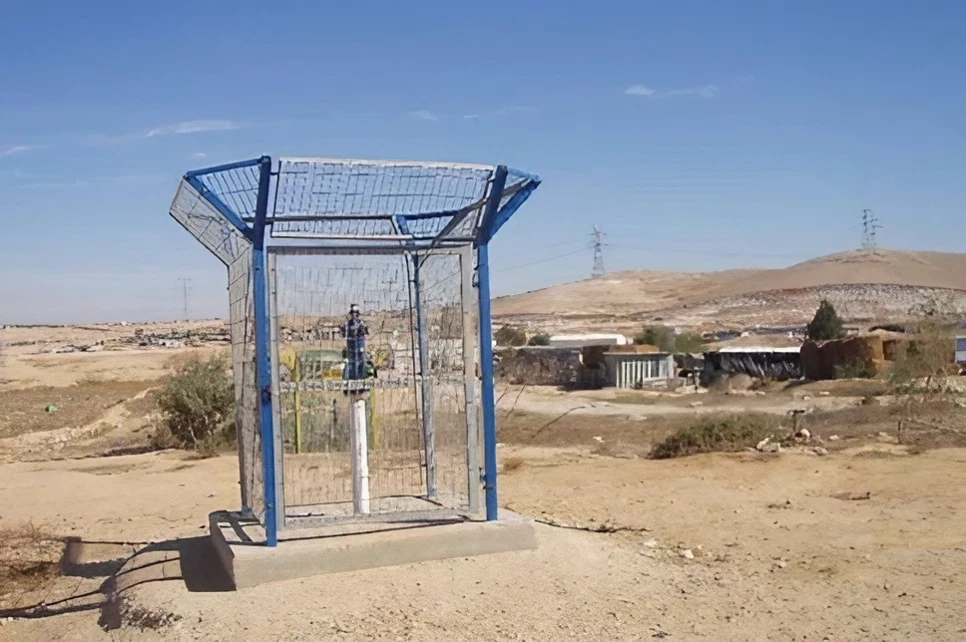
Figure 1: A water station stands in front of an “unrecognized” Bedouin village in the Naqab, while the village’s residents themselves have no access to water. Photo: Courtesy of Ameer Makhoul.
While the geographical scope has widened, many studies still operate within short temporal frames, often tied to specific regimes or development projects. Such discussions, I think, resonate with Santos’ question, “when was the global?” which builds on Stuart Hall’s (1996) invitation to think “at the limit,” and explores the meaning of the “post” in postcolonialism and what the answer entails. These insights redirect our attention to the histories of routes, architectures, and knowledge of infrastructure—particularly in networks that imperial powers have introduced to the Global South.
Recent research on the socio-political dimensions of infrastructure that challenge conventional temporal boundaries has adopted a longue durée approach. Such studies demonstrate that earlier—often colonial—projects have endured or provided the foundations for contemporary infrastructural systems, thereby continuing to shape the material and political conditions of infrastructural life today. Using the longue durée approach to infrastructure, Enns and Bersaglio (2020) demonstrate how contemporary mega-infrastructure projects in Kenya and along Tanzania’s Central Corridor have perpetuated colonial legacies, sustaining uneven patterns of (im)mobility that were established during the Scramble for Africa and reinforced in the post-independence era. Similarly, Terrefe and Verhoeven (2024) offer a longitudinal account of the Horn of Africa’s infrastructure, tracing the co-production of infrastructure and sovereignty over roughly 150 years. They argue that this entanglement has been a defining feature of regional politics.
In a similar vein, a study I jointly conducted (Sa’di-Ibraheem & Wilkof, 2025) on telephone infrastructures in Palestine/Israel demonstrates that extended temporal analysis does more than disclose resemblances or continuities in power relations. It also reveals distinct mechanisms and practices which have had a cumulative impact of infrastructural inequalities over time. The telephone sector in Palestine, for instance, which the British developed unevenly during their Mandate, giving priority to the Jewish settler population, particularly in rural areas, was inherited after 1948 by Israel. Thus, Israel was left with a landscape in which Jewish settlements were well-connected through a developed telephony network, while Palestinian villages were left as virtual terra nullius in infrastructural terms. The new state (1948), viewing the Palestinians who remained within its borders as a temporary problem, initially pursued policies of displacement and population transfer, and the telephone became both an instrument and a rationale for exclusion and dispossession. During the Military Government era (1948-1966), while telephony services were selectively extended to Arab localities, they functioned less as means of connectivity and more as mechanisms of control, surveillance, and social engineering. Requests for connection to the telephone line were granted selectively, rendering the telephone network a key apparatus through which the state reproduced hierarchies, dependence, and exclusion.
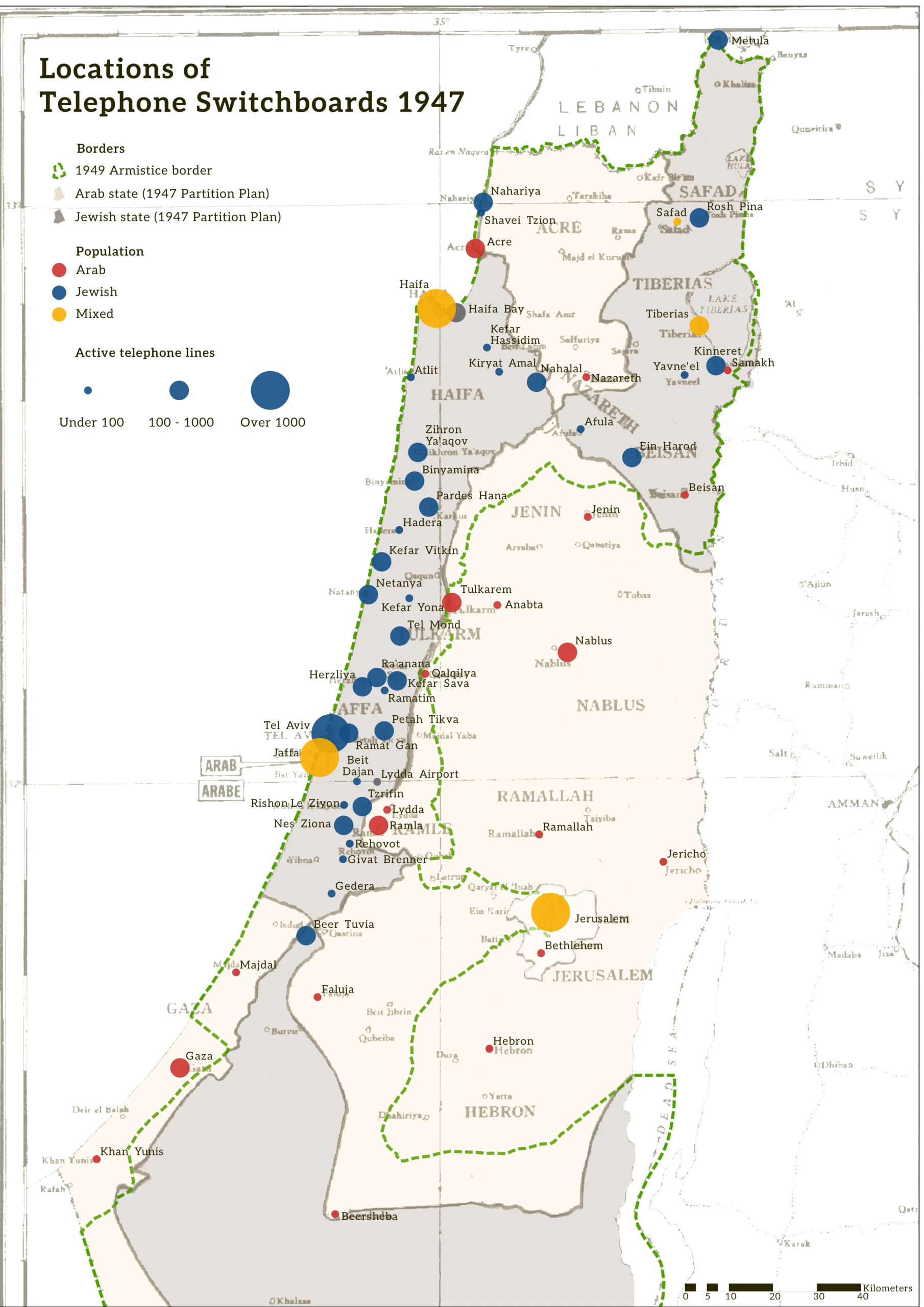
Figure 2: Location of switchboards in Palestine by the end of 1947. Map taken from Sa’di-Ibraheem & Wilkof (2025), prepared by Bar Weinberg.
Tracing the (de)developments of the telephone infrastructure since its beginning unveils how events and changes in political and economic regimes, such as the end of the British Mandate, the establishment of Israel, the privatization of the telecommunication sector in the 1980s and the introduction of new technologies such as the Fiber optics, cannot constitute a proper “beginning” for the research. Furthermore, our findings illustrate how today’s uneven telephone provision in Israel reflects sedimented rationalities and decisions that have spanned the last century.
In sum, this text endeavours to bring global sociological reflexivity to infrastructure studies, illuminating both the epistemic and material architectures of inequality. In this regard, the longue durée approach, briefly presented here, enables a more comprehensive understanding of how infrastructures operate not merely as conduits of power but as terrains where alternative futures can be imagined, negotiated, and sometimes foreclosed. Moreover, it highlights how infrastructures are embedded in authority and difference across time, and how they are used to reproduce past hierarchies through modes of governance, as well as how their very persistence challenges conventional narratives of rupture and progress. However, this approach also raises pressing questions, such as how infrastructural studies can develop their epistemologies and avoid reproducing Northern temporalities and assumptions of linear development. What methodologies are best suited to capture the slow, cumulative operations of infrastructural power without losing sight of the everyday agency that reconfigures it? Moreover, ultimately, how could an attention to the longue durée open conceptual and political space for developing new ideas about infrastructures—not only as remnants of empires, but as potential grounds for reparation, repair, and more just futures?
References

By Soledad Balerdi, National University of La Plata
Land occupation and self-construction of houses are the most common ways through which disadvantaged populations solve their access to housing in developing countries. These practices are usually designated as “informal” and “illegal” by the State, the civil society, and the media. Based on the emic concept of “legal land takeover”, I will propose a broader comprehension of these processes, where formality / informality, and legality / illegality, are not dichotomies but articulated mechanisms in which the urban space is built in the cities of the Global South.
Southern urbanism has vastly argued that mainstream urban theories, originating from the Global North, have been largely regarded as universal and placeless, while cities from the “south” have historically been viewed more as testimony than theory (Bahn, 2019). According to Bahn (2019), “the urbanism of these cities has been read, described and understood largely in terms of theory built elsewhere” (p. 641). This text takes on the challenge of thinking from these places, and not just about them (Bahn, 2019). Or as Caldeira puts it, “thinking with an accent”: “to create urban theories that can account for modes of urbanization whose logic is different from that of the industrial cities of the North” (Caldeira, 2017, p. 4).
“Legal land takeover” sounds like an oxymoron, as “takeover”, “occupation” or “invasion” are the terms that have been used to describe the illegal takeover of land by low-income dwellers and their organizations and social movements. These processes produce “informal” or “irregular” spaces where the low-income groups live and build their “habitat” (Janoschka, 2016).
Informality is not just a technique or objective characteristic of poor neighborhoods or settlements (in terms of the lack of property titles or the incorrect use concerning land use prescriptions), but –in many cases- it is also a mechanism used by the State to legitimate the eviction of these settlers in the name of the protection of private property rights. As a relational (Pasquetti and Picker, 2017) or procedural category (Müller, 2017), informality is not a “static fact” or a “marker of the urban poor’s form of urbanization”, but rather an effect of power relations and class struggle (Müller, 2017, p. 498).
However, as my research on irregular settlements and housing policies in Argentina seeks to show, the State also intervenes in many cases enabling negotiation with the dwellers and their organizations to resolve the housing conflict. In doing so, the State recognizes and even institutionalizes the occupation as an action that, although not legal, is legitimized.
The scene: a relocation conflict in Argentina
Latin American cities as we know them today have originated from a vertiginous urbanization process during the 20th century, marked by the massive internal migration of workers that traveled from rural areas to the cities; the concentration of the population in one or two large cities per country and the expansion of “informal” or “irregular” settlements on the peripheries of those cities, where low-income groups established. The first land occupations in Argentina took place in the 1980s. Still, it is a practice that -although with many changes- has been maintained until today as a mechanism for low-income groups to guarantee themselves their access to land and housing. State interventions and policies towards informal settlements have changed over the years and have assumed different characteristics depending on the governments. These modes of intervention have gone from eradication to regularization of informal settlements. However, despite the various housing policies implemented, inequality in access to habitat remains one of the main social problems Latin American cities face today. Currently, in Argentina, there are more than 5,000 “informal urbanizations” characterized by different degrees of precariousness in housing infrastructure, overcrowding, deficiency of public services, and irregular tenure.
This reflection is based on a scene that took place during a relocation process in the city of La Plata. I studied this process, from an ethnographic approach, following a conflict motivated by the relocation of a small neighbourhood called Las Quintas, an informal settlement in the city’s periphery.
Las Quintas is a small settlement inhabited by an indigenous population from northern Argentina who migrated in the early 2000s, displaced from the rural areas where they used to live and in search of livelihood in the city. They settled on the land in precarious conditions, building small wood, plastic, and sheet metal shelters. Then, they consolidated the neighborhood over the years and progressively improved their houses.[1]
In 2015, a hydraulic infrastructure project began to be developed to expand a stream that runs next to the neighborhood. Las Quintas is located on the banks of the stream. The provincial government promoted this project due to a flood that took place in the city of La Plata two years earlier, which caused the death of 100 people. The infrastructure project promised to prevent future flooding in the city, but to do so implied the displacement of the low-income populations living on the stream’s banks. These areas were not land suitable for building; however, they had been occupied for many years by low-income populations (mostly migrants from the north of the country and neighboring countries such as Paraguay, Bolivia, and Peru) who, upon finding “empty” and public lands, began to build their homes there.

Picture 1. Las Quintas after the flooding. Copyright: Photo by Kaloian Santos Cabrera. Published in:
lapulseada.com

Picture 2. Tracks working on the stream, nearby Las Quintas. Copyright: Photo by Laura D’Amico. Published in:
lapulseada.com
According to Michael Janoschka (2016), displacement refers not only to the involuntary movement of people, but also to the social and spatial injustice that affects their legitimate right to the city; especially regarding their right to the enjoyment of the benefits of centrality. Forced displacement of vulnerable populations has been a critical urban process in Latin America (Janoschka, 2016), but not all displacement processes are the same or have the same features. In Argentina, some neoliberal governments have had an expulsion or eviction policy without offering any alternative to the displaced populations. In other periods, these displacements have taken place while providing the displaced populations with alternative destinations.
In the case of Las Quintas, the inhabitants who had to be displaced from their neighborhood to develop the hydraulic work would be transferred to new houses that the State would build for them in another sector of the periphery.

Picture 3. The new houses built to relocate the population of Las Quintas. Copyright: Photo taken by the author during fieldwork.
The conflict between the inhabitants and state officials arose when the residents rejected the relocation offer. Although the new houses came with property titles, they refused to be displaced from their current neighborhood. The rejection stemmed from the residents’ perception that the area they were being relocated to was more “insecure” or “unsafe”.[2]
And they were able to negotiate with state officials because their voices were raised by the leaders of the social organization to which they belonged. Urban social movements have historically had a strong presence in poor neighborhoods. They articulate demands for improvements in working and housing conditions of low-income populations, pressing to or negotiating with the State, which recognizes them as valid interlocutors in conflicts. According to Caldeira (2017), state institutions are vital in creating or promoting the conditions for the inclusion of the poor in the city. This is the case in the many regularization and urbanization programs that are implemented in the Latin American cities. However, the state only acts in the interest of dwellers when their organizations manage to pressure it, “maintaining their disturbing presence in public spaces”, demanding changes in policies and institutional practices. When such organizing weakens, policies may shift toward dispossession and displacement (Caldeira, 2017, p. 16).
In this scenario, the inhabitants of Las Quintas pressured the State officials, threatening to forcibly impede the continuation of the hydraulic work if their demand was not accepted by publicly protesting and blocking roads in the city center (a political action repertoire with a long tradition in Argentina, the so-called “piquete”) or even literally putting themselves in front of the machines to stop them working. This urban conflict was not the first of this type that the State officials had to deal with. So they knew that the threat was not made by just a few affected dwellers from this little neighborhood but by a strong social organization that could mobilize hundreds of low-income dwellers from this and from other settlements of the city.
In the end, the State officials agreed upon the demand and the plan for the relocation of these dwellers was modified: a new destination for the relocation, proposed by the dwellers, was accepted.
The new destination was a vacant public land, property of the Ministry of Health of the province. Although it was also located in the periphery, even farther than Las Quintas from the city centre, the dwellers perceived it as a more tranquil space to live in. To begin with the construction of the houses on that land, the State officials in charge of the relocation process (from the Secretary of Land and Housing) had to receive from the current owner –another sector of the same provincial State- a formal “cession of rights”. So, to formally proceed with the relocation, the Ministry of Health simply had to sign a document transferring the land –that wasn’t being used- to the Secretary of Land and Housing. But, the formal transfer never occurred, perhaps due to the state bureaucracy’s slowness or conflicts of interest between the two government areas.
What happened next shows the point of this story: the State officials with whom the inhabitants were negotiating, called the organization’s leader and told him to proceed with the “legal takeover“. This meant that the inhabitants should occupy the land without waiting for the formal cession of rights, and the State officials would guarantee them, on their word, that they would not be evicted.
The very definition of “takeover”, even as it is understood by scholars, implies its illegal character. So what did the term “legal” used by the State official mean? “Legal” in this case seems to mean “informally authorized by the State” to carry out an otherwise “illegal” action. By enabling the “legal” takeover of the land, the State is institutionalizing a particular state of affairs, so –in the field- the boundaries between binary concepts, such as legal/illegal and formal/informal, are blurred.
The role of (in)formality in the production of the city
The low-income habitat is built through daily practices that involve conflicts, negotiations and agreements between inhabitants, social organizations and the State in the local territory. In this process, land occupation and self-construction of housing become practices endorsed – although not publicly – by State officials to respond to demands that cannot be met through “formal” channels.
According to Ayşe Buğra (1998), irregular settlements play an important role in developing countries as a spontaneous solution to the problem of low-income housing. However, in this process, the State actively shapes the informal housing sector. These irregular patterns of access to urban land become an institutionalized redistributive practice.
What can this case tell us about informality and the role of the State? Informality is a concept that emerged from the analysis of urbanizations in Latin America in the 20th century and is typically thought of as an essential characteristic of these cities, and what supposedly differentiates them from the modern and formal cities of Europe or North America (Segura, 2021). For Caldeira (2017), the notion of informality implies a dualist reasoning that must be set aside in the analysis of cities and its inequalities, as peripheries usually do not only unsettle official logics -those of legal property or state regulation for example- but they operate with them in transversal engagements.
My purpose in this brief reflection was to comprehend the urban, problematizing these binary categories, modern-traditional, developed-underdeveloped, formal-informal, by showing that formality and informality, legality and illegality, are articulated mechanisms throughout which the city is produced. So “informality” is not the exclusive characteristic of the self-built habitat of the urban poor in Latin America. Instead formality/informality –as an articulated concept- is rather the more general way in which the State produces the city.
According to Ananya Roy (2009), “First World” urban and metropolitan theory is curiously mute on the subject of informality, perhaps because it is thought of as an intrinsic feature of “Third World” cities, as a sphere of deregulation, an activity outside the scope of the State. But “informality”, as this case shows, does not imply the absence of the State. The State produces informality: it assigns and sets a differentiated value to spaces, determining what is and what is not informal, and in many cases the State itself operates in an informal manner. Roy also argues that informality is not a traditional or pre-capitalist aftertaste. It is a form of capitalist production of space. It is not limited to marginal spaces or low-income habitats; it is also a mechanism used by private urban enterprises. We can see this in the many cases of land grabbing by private investors for economic purposes (agriculture, real estate market).
I believe this empirical case in a small neighbourhood in La Plata can broaden our comprehension of the modalities in which the State produces the city. The State is not a monolithic actor, it is embodied in people who interact with others in specific settings, and who make decisions within certain circumstances. And its actions are not always or necessarily unidirectional or top-down; there are margins for resistance, negotiation, or re-appropriation.
Roy recognizes that Latin American researchers are generally interested in attending how the urban poor demand and appropriate adequate urban space and livelihoods, thus challenging the unequal conditions of citizenship that have been established in the Latin American city. In the same direction, Janoshcka argues that incorporating the concept of ‘habitat’ into the displacement dynamics allows us to further explore the spatial (re)appropriation led by low-income people and the subsequent construction of “territories in resistance”.
So the broad concept of formality/informality can also be thought of as a mechanism deployed by the urban poor to access land and housing in their struggle for the right to the city. In other words, it allows us not only to pluralize our approach to the State but also to attend to the strategies and knowledge that the urban poor deploy to influence the construction of their habitat in a situation of dispossession.
[1] Autoconstruction is the main form in which habitat is built in the peripheries. As Caldeira (2017) has clearly put it, in peripheral urbanization, urban dwellers become agents of urbanization, they built their houses and neighbourgoods in long term process, in conditions of precariousness and poverty, but also continously improving their habitat. This process generates unequal and heterogeneous cities.
[2] In terms of fear of crime.
References
Janoschka, M. (2016). Gentrification-displacement-dispossession: Key urban processes in Latin American cities. INVI, 31(88), 27–71.
Segura, R. (2021). Las ciudades y las teorías: Estudios sociales urbanos. Universidad Nacional de San Martín.

By Daniel Bultmann, Humboldt University of Berlin
The following article argues for the “provincialization” (Chakrabarty, 2007) of Pierre Bourdieu’s conception of power in social fields. Its aim is not only to study societies beyond North America and Europe but also to demonstrate how a global Sociology can broaden our understanding of power by incorporating Southeast Asian notions of liminal—and therefore ambiguous—potestas. Rather than subsuming all forms of power under a single logic, however, the article advocates embracing a pluriverse of powers, wherein agents may be marginalized and powerless in one ontological context while simultaneously powerful in another. These distinct forms of power are analytically distinguishable outcomes of past sediments that persist, hybridize, and/or coexist with sediments from later ontologies.
For Bourdieu, social fields are comparable to games, with players occupying relational positions akin to those in chess (Bourdieu & Wacquant, 1992, pp. 94-114). These positions are the result of accumulated economic, cultural, social and symbolic capitals, which through some implicit valuation process, define their value and potential actions within the field’s rules. Players must believe in and adhere to these rules—a concept Bourdieu terms illusio—and must consider the game worth playing (Bourdieu, 2020, pp. 199-200). In the educational field, for instance, agents must believe in the superior value of struggling for cultural capital, such as a professorship. This necessitates accepting certain values, rules, and the field’s existence itself. Bourdieu calls deep-seated beliefs doxa, which transcend individual fields. For example, belief in the nation-state as a fundamental organizing principle is a form of doxa in the global North. Each position in a social field requires a “feel for the game”, somatized behavioral schemes (habitus), acquired through prolonged learning (Bourdieu, 2020, p. 79).
Players strive to maintain or improve their relative positions, ultimately aiming to win against others (Bourdieu, 2018, pp. 80-100). Unlike games with fixed rules and borders, such as chess, social fields have negotiable rules and boundaries, making the field itself a stake in the game. This is also why “the limits of the field are situated at the point where the effects of the field cease” (Bourdieu & Wacquant, 1992, p. 100). Power in a field lies in defining its rules and the worth of the different capitals while accepting an inferior position and its consequences constitutes symbolic violence. Power, primarily symbolic, results from stocks of relevant capitals and is an “institutionally organized and guaranteed misrecognition” (Bourdieu, 1977, p. 171) of the arbitrariness of social hierarchies, benefiting those with higher capital volumes. This naturalization of power via misrecognition ensures that even marginalized groups view society through the lens of the powerful. In state formation, Bourdieu sees the state as the result of the accumulation and concentration of symbolic capital—a “meta-formation”—that becomes a symbolic “power of powers” (Bourdieu, 2020, pp. 190-195). A field is defined as:
In analytic terms, a field may be defined as a network, or configuration, of objective relations between positions. These positions are objectively defined, in their existence and in the determinations they impose upon their occupants, agents or institutions, by their present and potential situation (situs) in the structure of the distribution of species of power (or capital) whose possession commands access to the specific profits that are at stake in the field, as well as by their objective relation to other positions (domination, subordination, homology, etc.) (Bourdieu & Wacquant, 1992, p. 97).
The problem with Bourdieu’s notion of power in fields is that it recognizes only one mechanism or—to use a Foucauldian term—technology of power: the symbolic misrecognition of accumulated symbolic capital gained through social struggles in the past. The implicit neoliberalism embedded in miniature struggles over capital and the logic of accumulation, of “capital, investment, interest” (Bourdieu, 1996, p. 183), culminating in statements likening the state to a “central bank of symbolic credit” (Bourdieu, 1998, p. 376), calls for a provincialization of Bourdieu’s theory of fields and its situatedness in the capitalist and neoliberal French society of his time (Bultmann, 2023a). However, the related but distinct aim of this short blog entry is to expand the notion of power in social fields through two steps: first, a critique based on Michel Foucault, and second, an exploration of what I would call “ontologies of power” informed by discussions on precolonial power in Southeast Asian societies—forms of power that persist today. The claim here is that social fields consist of multiple layers of power ontologies. Within these layers, agents may occupy conflicting, if not contradictory, positions, emanating from differing social realities.

In Bourdieu’s graph, the field of power, somewhat surprisingly, consists of professors, artistic producers, private sector executives, and professionals (Bourdieu, 1998, p. 267)—a common phenomenon in which power is associated with professions within the researcher’s own social milieu.
One way to broaden the understanding of power in fields is through Michel Foucault’s assertion that societies encompass multiple forms of power—sovereign, disciplinary, pastoral, and governmental. Foucault consistently emphasized that different forms of power do not simply vanish with the emergence of new technologies of power, as one might mistakenly infer from reading his studies. Instead, he highlights that power formations overlap and interact in complex ways:
There is not the legal age, the disciplinary age, and then the age of security. Mechanisms of security do not replace disciplinary mechanisms, which would have replaced juridico-legal mechanisms. In reality, you have a series of complex edifices in which, of course, the techniques themselves change and are perfected, or at any rate become more complicated, but in which what above all changes is the dominant characteristic, or more exactly, the system of correlation between juridico-legal mechanisms, disciplinary mechanisms, and mechanisms of security. In other words, there is a history of the actual techniques themselves (Foucault, 2007, p. 8).
Although I will not be able to elaborate in detail here—leaving some thoughts partly uncooked—I am also convinced that Foucault’s technologies of power are connected to social structures (Bultmann, 2023b, 2023c). Different social groups in fields practice different forms of power and thus also create different coexisting and only partly overlapping hierarchies and institutions (Bultmann 2015).
In all fields, although forms of power are hybrid and multi-layered, they are additionally socially differentiated to varying degrees: the power of a military general, for instance, relies at its core on sovereignty, whereas that of a central banker is based on neoliberal governmentality. What complicates these configurations further is that not all forms of power are actualized at any given moment or within every relation. This is why a distinction between potentia (relational and actualized power) and potestas (non-actualized potency) is needed (Spinoza, 1996; Negri, 1991). With military generals, this becomes most obvious: their power to deploy organized violence is usually not actualized but remains ever-present as potential, that is, as potestas. Many forms of power incorporated into neoliberal governmentality function similarly, often becoming actualized only during crises (Bultmann, 2023b).
However, I would extend this argument further by pointing to ontologies of power that do not merely operate at the level of different technologies or techniques. Rather, they may fundamentally contradict what Walter Mignolo (2000) terms the “colonial/modernity matrix”, which would assume that agents occupy unambiguous, highly functional (and thus measurable) positions within power configurations. This assumption presupposes that technologies of power can intersect, merge, or form intricate configurations as they belong to the same ontology. The notion of ontologies, however, suggests that forms of power may be radically distinct from each other—comparable to shifting from a modernist/colonial epistemology to older epistemologies (Foucault, 1972; 1970) or to epistemologies of the South (de Sousa Santos, 2014). The idea here is radical: agents could be compared to Schrödinger’s cat, simultaneously powerful in one ontology and powerless in another. They could occupy a peripheral position in one framework and a central position in another, alongside drastically shifting institutions and logics of power.
The argument of the following sections is that the Tai mueang can serve as an example of an ontology of power that persists to this day—one that, through its liminality and ambiguity, both differs from and coexists with later ontologies. The term mueang broadly refers to a sociopolitical formation in premodern Southeast Asia, particularly among Tai-speaking groups (Wolters, 1982; Raendchen & Raendchen, 1998). While commonly translated as ‘city,’ ‘town,’ or ‘principality,’ its meaning in the literature is far more complex and often highlighted as context-dependent. Unlike modern territorial states with fixed boundaries and jurisprudence, the mueang as a cosmic polity (Tambiah, 1977) is best understood as a center-oriented sociospatial imaginary structured around a relational hierarchy of power, where authority is distributed through networks of allegiance rather than rigid territorial control. At its core, the mueang is not only a political entity but also an ontological system integrating human and non-human forces. It derives its legitimacy and cohesion from its ability to harness and domesticate numinal potency—a form of mystical power believed to be embedded in places, spirits, and rulers (Sprenger, 2015). The ruler of a mueang, often referred to as chao mueang, is responsible for maintaining the balance between the human and numinal realms through ritual practices that bind peripheral spiritual forces to the center of the polity.
The political structure of the mueang is inherently fluid, composed of multiple layers of dependent chiefdoms and vassal states, each orbiting around a central power (Anderson 2007 [1972], p. 28). These subordinate units demonstrated allegiance to the core through tribute, ritual recognition, and corvée labor in exchange for military protection and status. Unlike modern states, whose borders are fixed and legally defined, the boundaries of a mueang are zones of ambiguity, where the influence of competing centers overlaps and fluctuates over time. These frontier zones are often inhabited by groups considered liminal or peripheral to the polity, such as forest dwellers or upland communities, who are seen as wild or non-domesticated in contrast to the mueang’s settled center.
Benjamin Baumann draws a fundamental distinction between the animist understanding of mueang and modernist perspectives, particularly in how collective identity, power, and space are conceptualized (Baumann, 2020; Baumann & Rehbein, 2020). In the animist framework, mueang is not merely a political structure but a social ontology where human and non-human beings as well as center and periphery co-constitute social order. The legitimacy of rulers is not simply based on human authority but on their ability to interact with, bind, and harness numinal forces of the forests that are believed to govern life, prosperity, and protection. The center of the mueang is a locus of power through its interaction with an ambiguous potestas, and its authority extends outward through relational ties rather than fixed territorial control. Unlike modernist nation-state models, where borders, hierarchies, functions and even power (e.g. executive vs legislative) is well defined, the mueang functions through fluid and shifting spheres of influence, determined by proximity to ritual centers rather than rigidly demarcated boundaries. Collective belonging in the mueang is similarly relational, defined not by ethnicity or citizenship, but by participation in ritualized interactions with numinal beings that are embedded in specific places. The social order is thus maintained through an ongoing process of domestication, where the wild, ambiguous, and liminal forces at the periphery must be brought into the fold of social collectivity.
Baumann (2020) emphasizes the centrality of liminality (Turner, 1967; 1969) to this process, as the frontier spaces of the mueang—forests, mountains, and other in-between zones—are not simply geographical peripheries but sites of transformative potestas. His idea is central to my argument here: These ambiguous spaces are neither fully inside nor outside the social order, embodying both separation and connection. They are inhabited by numinal beings whose potency can be both dangerous and beneficial, requiring ritualized relationships to harness their power. Unlike modernist perspectives that seek to resolve ambiguity through clear distinctions, the mueang embraces liminality as an essential aspect of social structure. It is within these zones that rulers and communities engage in acts of domestication, binding the wild potency of the liminal world into ritualized centers of order. This process ensures not only the stability of the polity but also its continuous reproduction.
Power in the mueang is deeply tied to this dynamic relationship between center and periphery, order and ambiguity. Authority is not derived from legal-rational, discrete and measurable structures but from a ruler’s ability to control and mediate numinal forces, ensuring the prosperity of the land and people. The ruler embodies the collective’s unity through their ability to accumulate and redistribute potency, often through rituals connected to peripheries that reaffirm their status as intermediaries between the human and non-human realms. However, this power is never fully secure. Just as numinal forces must be continuously domesticated, political authority in the mueang must be actively maintained through ongoing rituals and social enactments. The ambiguity inherent in liminal zones also means that the amount and type of power is not fixed but fluctuates, as rival centers may emerge, shifting allegiances and redistributing potency in unpredictable ways.
The relevance of this concept today lies in the persistence of the mueang as an ontology of power, coexisting with later ontologies such as the nation-state and the modernist/colonial matrix that knows no ambiguity (Baumann, 2022). In the modern world, the center in the colonial/modern matrix is considered the most powerful, as it accumulates the most symbolic capital, effectively acting as a “central bank of accumulated capital” (Bourdieu, 1998, p. 376). The periphery—often composed of highland minorities or marginalized populations—appears powerless and marginalized on all accounts within this framework. However, within the mueang ontology, the periphery remains a liminal space whose potestas paradoxically constitutes the potentia of the center. Wildness is not simply uncivilized but ambiguous and therefore ritually powerful. The center depends on ambiguous peripheries for its powers. However, this ontology of power did not simply vanish but coexists until today, making it a crucial factor when studying Southeast Asian fields. Armed groups, for instance, do not only connect to different technologies of power but also incorporate contradictory ontologies, where individuals deemed uncivilized “warlords” in one context are seen as ambiguously powerful and magically protected “strongmen” in another (Bultmann, 2015). Strongmen (known as proh khlang in Khmer) domesticate magical power by surviving the liminal dangers of battle. However, because they source their power from danger, it remains an ambiguous potestas that can be dangerous both to their peers (other commanders and soldiers interacting with them) and to themselves—if it is not properly domesticated through magical rituals, dietary restrictions, and a moral code: “These rules were explicitly ethical, such as not to threaten or shout at someone, not to steal, not to rape someone’s daughter, or not to do harm to civilians. But they could also be more related to dietary and hygienic regulations, such as not to eat pork or not to wear your amulet during a visit to the toilet or not to urinate and defecate at the same time” (Bultmann, 2015, p. 149).

A Cambodian proh khlang from the Khmer People’s National Liberation Front (KPNLF) of ambiguous and liminal power (picture by author).
Their power stems precisely from the liminality, ambiguity, and volatility that define the proh khlang. Depending the position within the field or the ontological framework they inhabit, individuals may be simultaneously powerful and powerless. They can not only occupy ambiguous positions in one ontology (within the mueang for instance) but also across ontologies. There is not just one power configuration, but a “pluriverse” (Kothari et al., 2019) of ontologies of power, in which peripheries can not only have a liminal potency in one ontology, but when changing from one ontology to the next, be of ambiguous potency (in the mueang) and powerless (in the colonial/modernist matrix) at once.
References
Anderson, B. (1972). The idea of power in Javanese culture. In C. Holt, Politics in Indonesia (pp. 1–69). Equinox Publishing.
Baumann, B. (2020). Reconceptualizing the cosmic polity: The Tai mueang as a social ontology. In B. Baumann & D. Bultmann, Social ontology, sociocultures, and inequality in the Global South (pp. 42–66). Routledge.
Baumann, B., & Rehbein, B. (2020). Rethinking the social: Social ontology, sociocultures, and social inequality. In B. Baumann & D. Bultmann, Social ontology, sociocultures, and inequality in the Global South (pp. 6–22). Routledge.
Bourdieu, P. (1996). The rules of art: Genesis and structure of the literary field. Polity.
Bourdieu, P. (1998). State nobility: Elite schools in the field of power (7th ed.). Stanford University Press.
Bourdieu, P. (2018). Classification struggles: General sociology Vol. 1, lectures at the Collège de France (1981–82). Polity.
Bourdieu, P. (2020). Habitus and field: General sociology Vol. 2 lectures at the Collège de France (1982–1983). Polity.
Bourdieu, P., & Wacquant, L. J. D. (1992). An invitation to reflexive sociology. University of Chicago Press.
Bultmann, D. (2023a). A global and diachronic approach to the study of social fields. Historical Social Research / Historische Sozialforschung, 48(4), 81–103.
Chakrabarty, D. (2007). Provincializing Europe: Postcolonial thought and historical difference. Princeton University Press.
Foucault, M. (1970). The order of things: An archaeology of the human sciences. Random House.
Foucault, M. (1972). The archaeology of knowledge: And the discourse on language. Pantheon Books.
Foucault, M. (2007). Security, territory, population: Lectures at the Collège de France 1977–78 (M. Senellart, Ed.; G. Burchell, Trans.). Palgrave Macmillan.
Kothari, A., Salleh, A., Escobar, A., Demaria, F., & Acosta, A. (2019). Pluriverse: A post-development dictionary. Tulika Books.
Mignolo, W. (2000). Local histories/global designs: Coloniality, subaltern knowledges, and border thinking. Princeton University Press.
Negri, A. (1991). The savage anomaly: The power of Spinoza’s metaphysics and politics. University of Minnesota Press.
Raendchen, J., & Raendchen, O. (1998). Present state, problems and purpose of Baan-müang studies. Tai Culture, 3(2), 5–11.
Spinoza, B. (1996). Ethics. Penguin Classics.
Sprenger, G. (2015). Graded personhood: Human and non-human actors in the Southeast Asian uplands. In K. Arhem & G. Sprenger (Eds.), Animism in Southeast Asia. Routledge.
Turner, V. W. (1967). The forest of symbols: Aspects of Ndembu ritual. Cornell University Press.
Turner, V. W. (1969). The ritual process. Penguin.
Wolters, O. W. (1982). History, culture, and region in Southeast Asian perspectives. Institute of Southeast Asian Studies (ISEAS).

By Megha Amrith, Max Planck Institute for the Study of Religious and Ethnic Diversity
In 1993, Stuart Hall noted that “the capacity to live with difference is […] the coming question of the twenty-first century” (1993, p. 361). In a context of twenty-first century global flows and transnational (dis)connections, this a question that holds immense contemporary relevance. I suggest how a global sociological focus on care could provide a generative space to concretely think about living with and engaging difference in everyday, intimate life; that is, through the relationships that sustain households and communities around the world and the social inequalities, boundaries, and transgressions that are expressed within this space.
Like many scholars of care, I first approached the topic following the foundational feminist sociological literature on the topic in the 1990s, in particular the work on “global care chains”, which focussed on the “international transfer of caretaking” (Parreñas, 2000, p. 561) and the “series of personal links between people across the globe based on the paid or unpaid work of caring” (Hochschild, 2000, p. 131). The global connections between women from the Global South and societies of the Global North, makes this topic central to global sociology and reflects the “connected sociologies” (Bhambra, 2014) of different regions of the world, connected as they are through historically-constituted inequalities. The key contributions of this earlier sociological literature to the broader field of care have been to illuminate the commodification of care and how this produces and perpetuates the dispensability of migrant workers and the forms of exploitation they experience in global care economies; and to shed light on the contemporary feminization of migration, given that paid care work is increasingly undertaken by racialized migrant women from lower-income countries whose work remains undervalued. There are new demands for different kinds of care work globally contributing to a pattern of women leaving their families in lower-income countries to travel to higher-income countries. These women, in turn, hire other women in their countries of origin to do the caring labour at home, or they rely on family members to do the unpaid care work (Rinaldo, 2024), while continuing transnational care responsibilities in a complex global web of care.
As an anthropologist by training, these sociological perspectives have been central to understanding the broader structures of care work globally, while also shedding light on migrant women’s agency in contesting particular structures of exploitation through activism or through everyday acts of resistance. My own ethnographic research has largely focussed on migrant women in the domestic and care work sectors – from the migration of nurses from the Philippines to Singapore; and of ageing domestic workers of different nationalities moving within Asia.

Photo 1: Migrant women play a central role in caring for households and families in the busy and unequal global city of Singapore.
Through this ethnographic work, however, I have often found it necessary to think beyond a “care chains” analysis as it tends to presume a particular linearity in migrant women’s mobilities, while also focusing primarily on Global South to North movements. Equally important are South-South or intraregional movements and inequalities, which enable moving beyond thinking about women from the Global South as victims of global commodification processes, existing solely to service the care needs of those in the North. Thinking beyond care chains might also enable more expansive understanding of care as space for negotiating forms of social and political belonging (Coe, 2019). The two ethnographic examples that follow demonstrate how a focus on intimacy and encounter in care work can challenge paradigms that focus exclusively on victimization to centre migrant women’s agency in ways that go beyond resistance (Vorhölter, 2024). They further reveal how social categories and differences are bridged, reinforced, and negotiated through care.
Singapore, a city at the centre of global capitalist and transnational migration flows, espouses a strong orientation towards “filial piety” and kinship care for its ageing population. Families, nonetheless, increasingly turn towards migrant care workers to look after the older adults in their families either at home or in stigmatised nursing homes funded by charitable religious foundations. There is little investment by the state in eldercare, alongside a devaluation of eldercare work, echoing the literature on global care work emphasising low wages, long hours, and poor social protections of labour and welfare. The nursing home is characterised by cultural and linguistic diversity – Singaporean Chinese, Indian and Malay patients are cared for by nurses from China, India, and the Philippines and the languages one hears include Hokkien, Cantonese, Malay, Tamil, and Tagalog. Racialized ideas about darker-skinned nurses from India and the Philippines touching Chinese bodies, for example, co-exist alongside commonalities among Catholics who share faith across different ethnic and linguistic backgrounds. Over time, bonds develop between the nursing home residents and their migrant caregivers through the everyday interactions of care work: feeding, bathing, cleaning, taking the residents to physiotherapy and making sure they are comfortable. The residents lament that their children are too busy to visit them, while the caregivers share that longing for their families who live far away. They share solitude, watch Korean soap operas together, and they jointly complain about the rising cost of living in a global city in which they remain on the margins in forms of implicit, ‘horizontal’ solidarity. Despite developing close relationships with those for whom they care, the conditions of work are not attractive enough for caregivers who have global and professional aspirations for a ‘better life’, ultimately making this a space of fleeting encounters. These intimate encounters, nonetheless, transform caregivers’ sense of relational ethics – as those doing the ‘good’ work of caring for others– while also broadening their social understandings of the world through these encounters with difference. This space further reflects the broader social landscape of care, shaped as it is by local, regional, and global dynamics. Yet the relationships and encounters within these landscapes cannot be grasped only through the globalised power inequalities that shape them (Burchardt, 2022).
It requires living with others, touching the bodies of others, feeding and caring for them. Sometimes these caring relationships are spoken about in a language of kinship (Amrith & Coe, 2022), where there are attempts to bridge the class, gender, and racialized differences between employer and worker. Acknowledging the vast sociological literature and the social movements on domestic work which highlight kinship as a mode of further exploitation of domestic workers, we must nonetheless also take seriously the narratives of those domestic workers who speak of the importance of kin relations with their employers. In politically restrictive contexts like Singapore and in the absence of social movements to incorporate domestic work as work into local labour laws, I found that kinning through the everyday intimacies of care work remains important as a means to establish a sense of belonging, as well as reinforce their social value. I appreciate here Carol Chan and Rosario Fernández-Ossandóns’s (2022) argument of domestic worker-employer relationships in Chile that care “cannot be free from or reduced to power in these racialized affective labor relations”. Similar dynamics are evident in different contexts of the Global South where contractual claims often co-exist with kinship claims to belonging (see e.g. Bioacchi, 2023) yet are always fraught with ambivalences given that class and racialized boundaries are often reasserted in multiple ways in these intimate spaces. Women’s migration trajectories, however, are not exclusively shaped by their labour. While migrant women’s journeys in the care chains literature is often framed in terms of a “sacrifice” for their families and their nations, women’s own life projects overturn a number of these normative assumptions about them being “absent mothers” or victims of globalization. Beyond the household, migration might offer the possibilities for pursuing diverse aspirations through the arts, education, self-transformation and to participate in “intimate counter-spaces” in public with other migrants (Pande, 2012, p. 2), which “challenge various levels of exclusions by the state, their employers, and society at large” and allow for being in the world beyond the categories into which they are normally placed as racialized migrant women in the global care economy.

Photo 2: Friendship and solidarity are important dimensions to migrant women’s experiences abroad.
These two examples demonstrate that while encounters in care work in the global economy are reflective of enduring social and economic inequalities on a range of scales, these encounters might generate new forms of belonging and challenge normative public discourses on what care ought to look like. Starting from the narratives of these transnational actors can offer a lens onto understanding global (dis)connectivities and potential transformations, as well as the different scales of experience that are constitutive of global sociology. They further illuminate the importance of considering experiences where the Global North is not the sole reference point. These stories from the field can be scaled up to do the analytical work, as Tatjana Thelen (2015, p. 497) puts it, to examine care’s potential to overcome “commonplace dichotomies such as private-public, good–bad, modern–traditional, and micro–macro” and to counter still persistent perceptions of care as “private” rather than a central aspect of human social, economic, and political life. Beyond care labour, care – with all of its ambivalences and tensions – remains central to social relationships in a range of contexts, in relation to climate change, geopolitical uncertainty, austerity, and social and political division. Recentring care as a global sociological concern might enable a deeper understanding of how people experience social inequalities in intimate ways, while also reconfiguring notions of social difference and social norms, at home and in the world.
References
Coe, C. (2019). The new American servitude: Political belonging among African immigrant home care workers. NYU Press.
Hochschild, A. R. (2014). Global care chains and emotional surplus value. In Justice, politics, and the family. Routledge.
Parreñas, R. S. (2005). Migrant Filipina domestic workers and the international division of reproductive labor. In Pinay power. Routledge.

By Clara Ruvituso, Ibero-Amerikanisches Institut – Preußischer Kulturbesitz
Introduction
In the 2016 book Debates latinoamericanos, Argentinian sociologist Maristella Svampa pointed out that one of the central dilemmas of Latin American social sciences is not the lack of production or originality, but constant attempts to subalternise its production and its fundamental debates. A result of this has been a kind of “accumulation deficit”, the product not only of deficient infrastructures and funding, but also of censorship, exile, persecution and marginalisation of voices throughout history.

Cover of Maristella Svampa’s book on Latin American debates (2016).
In her studies on social science production, sociologist Fernanda Beigel (2014) has shown that Latin America as a “periphery” has its own centres or peripheral centers, with alternative circuits and logics of recognition, contested canons and infrastructures with local, but also regional and global impacts. More than a lack of production of knowledge, the problem of Latin America seems to lie elsewhere: namely the question of its circulation. Can we move towards a global sociology without attending to the production of knowledge in the so-called peripheries? How to advance in this necessary opening of Eurocentric canons?
My proposal is to contribute to this challenge from a historical perspective, with a focus on showing the ways in which Latin America intervened in global debates in the social sciences. Theories and perspectives with Latin American components that have had a greater global circulation and a more global scope are the so called “dependency theory” in the 1960s and 1970s and, a few decades later, the current “decolonial” critique. Both currents of thought had and still have an impact in Europe, although little is known about the practices and ideas they influence and the way they are interconnected. Along these lines, my contribution is to use these two paradigmatic cases of the circulation of Latin American knowledge in Europe in different periods to reflect about the challenges of a global sociology.
The dependency theory
From the Cuban Revolution in 1959, through to the experience of the Unidad Popular in Chile (1970–1973) and the Sandinista triumph of 1979, Latin America experienced a period of unprecedented prominence in international politics. One consequence was the greater recognition of its intellectual and cultural production in Europe (Ruvituso, 2020a). This was the period in which Latin American social theory was able to circulate with greater intensity in south-south and south-north directions. This historical context explains the boom of translations of Latin American social scientists into English, French and German. The fact that most of the Latin American authors translated into German were published in the prestigious collection edition by Suhrkamp, the epicentre of the post-war West German intellectual field, is fundamental to understanding the impact and scope of dependency theories in the Federal Republic of Germany. Publication in the edition Suhrkamp provided an unprecedented platform for the recognition of Latin American authors within Critical Theory. The mediation of the German sociologist Heinz-Rudolf Sonntag together with Elena Hochman from Venezuela explains why the first translations were books by the Venezuelan Armando Córdova and Héctor Silva Michelena. The political scientist Dieter Senghaas was in charge of mediating the translation of texts by Fernando H. Cardoso, Ruy Mauro Marini, Celso Furtado, Theotonio dos Santos (Brazil), Osvaldo Sunkel (Chile), Aníbal Quijano (Peru) and Rodolfo Stavenhagen (Mexico), among others.


Covers of the German translation of “Dependency and development in Latin America” (1976) and the French translation of “Dependency and development in Latin America” (1978).
It is also noteworthy that the sociological essay “Dependency and Development in Latin America” by Fernando Henrique Cardoso and Enzo Faletto was first translated into German (1976, edition Suhrkamp) and only two years later into French (1978, PUF), despite Cardoso’s close relations with France.
Publications of Latin American dependency authors into French started earlier and lasted longer, between 1963 and 1989. France was the European epicentre of Latin American intellectual formation and a central place of exile. Most of the publications of Latin American authors in French have taken place in academic publishers such as Presses Universitaires de France (PUF) and Anthropos and their respective journals: Revue Tiers Monde and L’homme et la société.

Cover of the French journal “Tiers Monde” (1972).
During the 1970s and 1980s, the works of many Latin American authors who took part in dependency debates were used as a theoretical-conceptual framework for empirical research. Particularly paradigmatic was the case of the Freie Universität Berlin where the Institute for Latin American Studies (Lateinamerika-Institut, LAI) has been operating since 1970. The LAI produced numerous empirical studies from a dependency perspective, applying the concepts of centre-periphery, marginality, structural heterogeneity and internal colonialism to national or comparative case studies. In the section of Development Sociology of Bielefeld University the theory of “subsistence production” was developed in dialogue with the Latin American dependency theory (Evers, 1981). The relevance of the international dialogue and solidarity with Latin American social scientists, especially in the face of the Chilean dictatorship since 1973, was key for the circulation of dependency theories (Ruvituso, 2019). With the fall of the Berlin Wall in 1989, the German institutional landscape changed considerably. Simultaneously, the idea of the “Third World” and thus dependency theories came into a legitimation crisis (Menzel, 1992). Eastern European studies became more relevant, and the development agenda shifted to issues of market integration and globalisation (Werz, 2016).
Decolonial/Postcolonial Critique
A new discovery of “Southern Theories” in Germany and France takes place in the context of the ongoing reception of postcolonial/decolonial studies. In Germany, this reception started in the fields of history, cultural studies and sociology and more recently also reached political science. German-based academics have begun to express the need to put on ‘post-colonial glasses’, especially in Europe. In general, they share the following diagnosis: there is an analytical narrowness in the consideration of “modernity” as a Western achievement and European social sciences and humanities are still deeply marked by colonialism. A central point is the critique of the implicit teleology or universalism of theories in the social sciences and humanities in Europe. The results of postcolonial/decolonial research lead to the overcoming of a linear evolutionary history of modern societies. Under Dipesh Chakrabarty’s (2002) now famous premise of “provincialising Europe”, postcolonial/decolonial critique allowed for a reflection on one’s own point of view and different positions: “a self-reflection of the material-structural as well as symbolic-cultural and metaphorical localisation of one’s own practice” (Reuter & Villa, 2010: 24–25, own translation). Within this framework, it is stressed that all positions must be problematised in order to break away from static, binary and essentialist notions of subalternity, hegemony, identity and difference. The following characteristics can be observed in this reception: a) Decolonial approaches (more linked to authors from Latin America) and postcolonial approaches (more linked to authors from other peripheries, former colonies such as India) are not differentiated and included in the same perspective; b) the most visible authors are those based in centres of academic production in the global north: Walter Mignolo, Homi K. Bhabha, Dispesh Chakrabarty, Gayatri Spivak, with circulation and/or translation into English; c) the decolonial/postcolonial turn is not related to the critical lineage linking them to the dependency theories in the 1960s and 1970s.


Covers of the books “Decolonizing European sociology: Transdisciplinary approaches” (2010) and “Postcolonial sociology: Empirical findings, theoretical connections, political intervention” (2009).
Inequalities and power asymmetries are reflected within the European circulation of postcolonial/decolonial studies: The authors currently circulating in the German-speaking world are those who already belong to the Anglophone ‘postcolonial’ canon, while similar voices, especially those from Latin America, receive little attention. These inequalities in the circulation of postcolonial/decolonial voices are reproduced when looking at the so-called precursors of decolonial thought. Here we find Frantz Fanon and Aimé Césaire and Edward Said. However, Latin American precursors (such as Rodolfo Kusch, Lélia Gonzalez, Beatriz Nascimento, Darcy Ribeiro) continue to be invisible. In the 1970s, dependency focused on the structural south-north asymmetries in global capitalism and came directly to Europe from Latin America (especially Chile), accompanying the narrative of Third World and solidarity movements. Currently, the “decolonial/postcolonial” critique is received in Germany mainly through some voices institutionally grounded in the USA and England and puts the focus on an agenda that includes the question of subaltern voices, positionality, and intersectionality. While dependency argued for political-economic regime change, decolonialism promotes a more symbolic institutional policy, which support diversity and epistemic justice (e.g. through the return of objects from museums, renaming of public spaces, inclusion of different perspectives in academic curricula).
For the circulation of both currents, the existence of area studies and the role of mediators was fundamental. If dependency contributed to the European Third World sensibility and solidarity on the basis of economic asymmetries, decolonialism adds a new and necessary sensibility on symbolic asymmetries. In my view, both perspectives together are necessary to build South-North ties in accordance with the political, social and environmental crises of the present.
How to achieve a global sociology?
The different initiatives and projects that seek to “open up” (Wallerstein, 1996), “decolonize” (Gutiérrez-Rodríguez et al., 2010) or “decentralize” (Brisson, 2018) the social sciences, as well as to “provincialise Europe” (Chakravarty, 2002), have made progress in making visible different inequalities (geopolitical, ethno-racial, nationality and language, gender) in the construction of south-north canons and asymmetries. The proposal of a global sociology is related to the recognition of global inequalities in knowledge production and the need to include approaches and perspectives from the South. Within this debate, I would like to argue for the relevance of thinking about the circulation of Latin American knowledge in a historical perspective. With this approach, we can observe that despite the unequal and asymmetrical relations of North-South exchanges and Western hegemony in the production of social theory, Latin America is a heterogeneous space of theoretical knowledge production with the capacity to contribute to local and global debates, from a critical perspective and at the same time linked to difference and diversity.
Cite this article as: Ruvituso, C. (2024, September 10). Doing Global Sociology: Why the circulation of knowledge matters? Global Qualitative Sociology Network. https://global-qualitative-sociology.net/2024/09/10/doing-global-sociology/
References
Brisson, T. (2008). Les intellectuels arabes en France: migrations et échanges intellectuels. Paris: La Dispute.
Chakrabarty, D. (2002). Europa provinzialisieren: Postkolonialität und Kritik der Geschichte. In S. Conrad & S. Randeria (Eds.), Jenseits des Eurozentrismus (pp. 283–312). Frankfurt am Main: Campus.
Evers, H.-D. (1981) “Einleitung”, in Bielefelder Entwicklungssoziologen (ed.), Subsistenzproduktion und Akkumulation. Saarbrücken: Verlag Breitenbach.
Gutiérrez-Rodríguez, E., Boatcă, M., & Costa, S. (Eds.) (2010). Decolonizing European sociology: Transdisciplinary approaches. Farnham: Ashgate Gower.
Menzel, U. (1992). Das Ende der Dritten Welt und das Scheitern der großen Theorie. Frankfurt am Main: Suhrkamp.
Reuter, J. & Villa, P.-I. (Eds.) (2009). Postcolonial sociology: Empirical findings, theoretical connections, political intervention. Bielefeld: Transcript.
Svampa, M. (2016). Debates latinoamericanos: Indianismo, desarrollo, dependencia y populismo. Buenos Aires: Edhasa.
Wallerstein, I. et al. (Eds.) (1996). Ouvrir les Sciences Sociales: Rapport de la Commission Gulbenkian pour la Restructuration des Sciences sociales. Paris: Descartes et Cie.
Werz, N. (2016). Von der Modernisierung zur Globalisierung: Entwicklungsforschung und Regionalstudien, Area Studies. In A. Gallus (Ed.) Politikwissenschaftliche Passagen: Deutsche Streifzüge zur Erkundung eines Faches (pp. 151-174). Baden-Baden: Nomos.

By Sylvia Esther Gyan, University of Ghana
Background
How can global sociology help us to more adequately conceptualize age, counted in the number of years lived since birth, that has long been viewed as a universal marker of personhood and status? Age is an important construct in medical sociology because it helps us understand health outcomes and behaviours (Barrett & Michael, 2022). When investigating sexual and reproductive health issues, having reasonable knowledge of the age of the target population helps in classifying and identifying the study population (who should be included or excluded), predicting and/or explaining their behaviours. As a researcher, whose target populations are mostly adolescents and women, knowing the age of my study participants is important, especially in studying issues about sexual and reproductive health.
In the general research process, knowing the age of research participants plays an important role in the ethical considerations for researchers. Including people below the age of 18 years in research is governed by strict ethical principles that seek to protect this group of people from any harm. It is therefore considered ethically right to seek the consent of a parent or guardian of study participants below the age of 18 years before seeking their assent to participate in a study. Going by this ethical principle, three actions are important: knowing the age of participants, seeking parental/guardian consent, and seeking the assent of the person below the age of 18 years in the study.
In data analysis, having a sense of the age of study participants informs how data would be described, explained, and interpreted. For instance, adolescents are described as people between the ages of 10-19 and are further categorized into young adolescents (10-14 years) and older adolescents (15-19 years). In the global literature on adolescents, these are the categories that form the basis of most of the discussions on sexual and reproductive health. On the issue of child marriage, the definition is based on the age of one of the parties in the marriage. Hence, knowing the age at first marriage of a participant plays a role in how the data would be interpreted with respect to existing literature.
My Challenge as a Researcher
As a researcher, I have realized that knowing the age of research participants is not always easy While the age of study participants is often measured as a continuous variable in chronological years (Johfre & Saperstein, 2023) this is not easy to pinpoint. In my interactions with my research participants, I have often observed that some did not know their age in years. This was common in communities with low education levels and low delivery of babies in health facilities. This was not peculiar to older women; it included some young women as well. Most of these participants lived in rural communities without the requisite documentation facilities and therefore it was not surprising that they had no record of their date of birth to inform them about their ages.
What steps can researchers take to help these participants arrive at a reasonable estimate of their ages or age range? In this post, I share my experiences on how I navigated the challenge of calculating the ages of my research participants when it was obvious they did not know their ages in years. I discuss this by highlighting the various strategies I adopted to arrive at a reasonable estimate of their ages.

Conducting an in-depth interview and being assisted by an interpreter.
Finding the age of my study participants
During one of my fieldwork visits for a study that sought to investigate child marriage in Ghana, I was confronted with my participants’ lack of precision regarding their age and its implications for my analysis. Knowing the age of the participants in this study was important because the study was interested in two main categories of women; women who married before the age of 18 years and were currently above the age of 18, and women who married before the age of 18 and were still below the age of 18 at the time of the fieldwork. Auntie Yaa, was a respondent who did not know either her current age or the age at which she got married. To have an idea of her age, I asked her to share some stories she was told about her birth by her parents. According to her, she was told that she was born at a time when Ghana was experiencing serious famine. This clue was very helpful to me because, in the history of Ghana, 1983 was the year the country experienced this kind of hardship; thus, I could estimate Auntie Yaa’s year of birth.
To help me know the reasonable age at which Auntie Yaa got married, I asked how long it took her to conceive her first child after she got married. According to her, she conceived immediately after she got married. Armed with this information, I asked for the age of her first child, and with this information, I got to know that she married before the age of 18 therefore per the study’s objective, she was classified as a woman who got married before the age of 18 and was currently above the age of 18.
In some instances, my participants shared their age or showed evidence of their age as indicated on official documents such as voters’ ID cards or their maternity health book. In the case of Ruki, her maternity health book indicated that she was 17 years old, however, my interactions with her suggested that she was about 21 years old. How did I arrive at the age of 21? According to Ruki, she got married at the age of 14 and did not conceive until the fourth year of her marriage. At the time of the interview, she had a 3-year-old daughter and was one month pregnant with her second child. Going by Ruki’s narrative, she should be 21 years, however, on her maternity health book for her second pregnancy, she was 17 years an indication that there were some inconsistencies in how old she was. Based on her narrative, she was classified as a woman who got married before the age of 18 and was currently above the age of 18.

Conducting an in-depth interview and being assisted by an interpreter.
On her part, Afia Atta did not know her age, however, she informed me that she was very young when some historical events took place in the country and recounted the various presidents who came to power and at what stage she was in life for each one of them. For instance, she noted that she gave birth to her first child, during the first coup d’état by Fl. Lt. Rawlings. This suggested that her first child was born in the year 1979. Although Afia Atta had no knowledge of her age, and even that of her children, such clues together with other biographical information gathered from her made it possible to put her in an age category based on the objectives of the research.
Conclusion
What constitutes global sociology has been described in different ways by various scholars. One that stands out for me is the perspective that doing global sociology means doing comparative sociology. Doing comparative sociology may stem from comparing the past and the present or comparing societies and cultures within and across societies and countries. Global sociology offers an opportunity to compare local case studies in different countries (either south-south or north-south) to identify universality and diversity in each social phenomenon. The basis for these comparisons makes a difference in the knowledge that is produced. Global sociology researchers must take into consideration the historical and social context of their study subjects (Akiwowo, 1988; Field & Syrett, 2020).
For instance, due to colonialism and modernity, age is measured chronologically in most societies in the global south and has become the basis of categorization to the neglect of other indigenous ways of categorizing people in terms of age sets or generations (Field & Syrett, 2020). This notwithstanding, we still have societies, where chronological age is not so important and therefore members of the society do not know their chronological age. We must make room for other age categories. Allowing my interlocutors to share their stories to inform or help identify their age set/ generations provides a better understanding of their age given their social context.
In most cases, to get around participants not knowing their age, relying on qualitative measures is very useful. Allowing participants to share their life stories by relating them to specific events in their personal life or in the wider society as well as probing further helped me to have a sense of their age range and not their specific age from their date of birth. Using this strategy reduced possible errors that could have been made because I did not know their ages or even relied solely on what has been documented as seen in Ruki’s narrative. Clearly, the institutional record of her age was not in sync with her narrative, therefore casting doubts about her documented age. This points out a limitation in the reliance on chronological age as the sole indicator of age in most research because, in some social contexts, there may be misrepresentation.
Relying on age categorization or groupings guided by the objective of one’s study could help reduce such misrepresentations. When researching a population or a group that may not know their age either because of low levels of education or poor record keeping, it is important to validate responses by asking probing questions to unearth the truth about their responses.
Finally, I recommend that researchers should be guided by the objectives of their study as well as the social context of their interlocutors to determine whether knowing the chronological age or age categorization of their participants will be the best option for achieving the goals of their research.
Cite this article as: Gyan, S. E. (2024, August 26). How old are you? Uncovering the age of research participants when it is not obvious. Global Qualitative Sociology Network. https://global-qualitative-sociology.net/2024/08/26/how-old-are-you/
References
Akiwowo, A. (1988). Universalism and indigenisation in sociological theory: Introduction. International Sociology, 3(2), 155-160.
Njonga, B. (2016). Je continue… Trente ans de lutte citoyenne. Yaoundé.
Weber, M. (2014). The Protestant ethic and the spirit of capitalism (T. Parsons, Trans.). Angelico Press. (Original work published 1905)